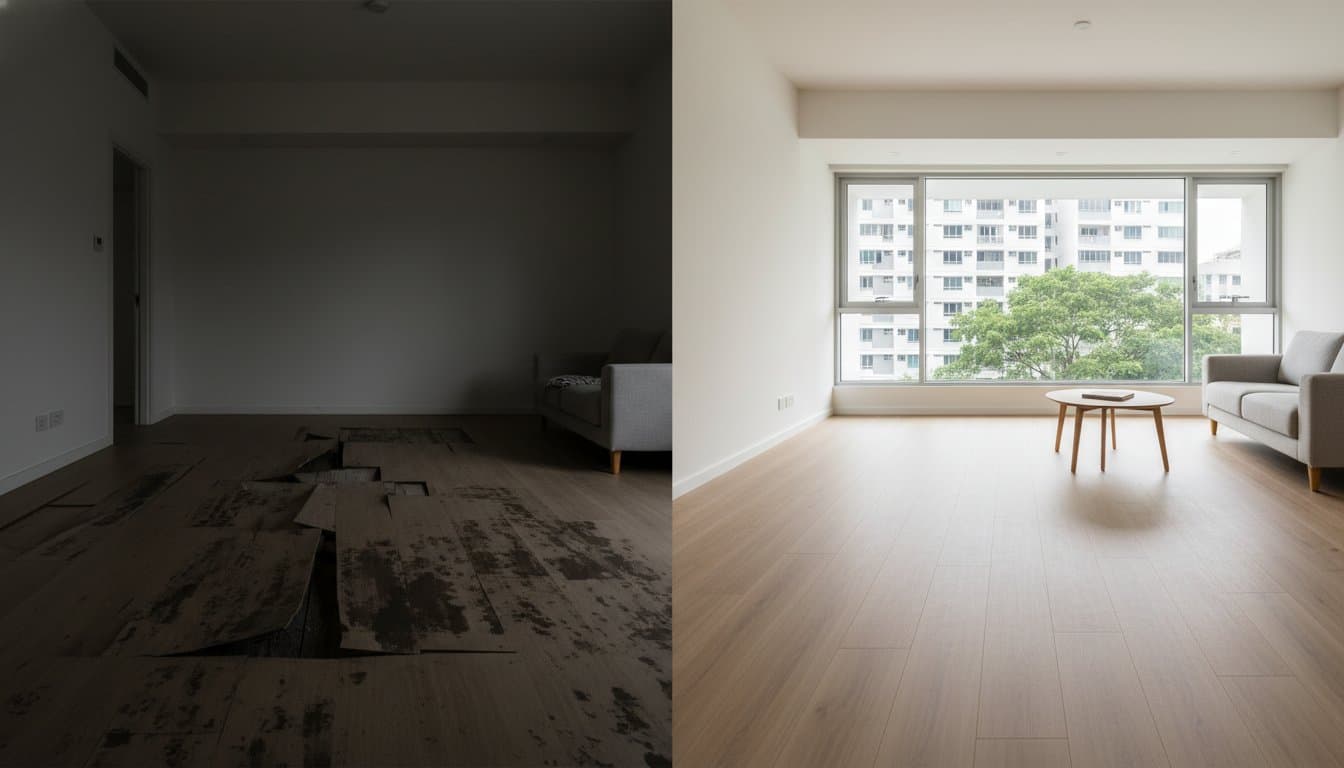
Vinyl Tiles vs. Porcelain Tiles: Which Premium Flooring Elevates Your Space?

Technical Editorial Director
AI Search Overview
What is it?
Discover Vinyl Tiles vs. Porcelain Tiles: Which Premium Flooring Elevates Your Space? with Nature Living Floor. Expert insights on premium flooring solutions in Singapore.
Why it's important?
Understanding Vinyl Tiles vs. Porcelain Tiles: Which Premium Flooring Elevates Your Space? is crucial for ensuring durable, waterproof, and aesthetically premium flooring installations in Singapore's humid climate.
Key Benefits
- Long-term durability
- High structural integrity
- Water & slip resistance
The most expensive flooring material in Singapore doesn’t always provide the most premium living experience. According to 2023 renovation industry data, flooring can account for up to 40% of a standard 4-room HDB renovation budget, yet the wrong choice often leads to daily discomfort. You likely believe that porcelain is the only way to achieve a high-end look, even if it means enduring cold surfaces and the stress of grout lines that inevitably stain or crack. When weighing vinyl tiles vs porcelain tiles, it’s essential to look beyond the initial price tag to find a solution that balances elegance with daily performance.
This article provides the definitive comparison between luxury vinyl and porcelain tiles to help you select the perfect foundation for your home’s aesthetic and lifestyle. We’ll explore how modern vinyl solutions mimic natural wood and stone flawlessly while providing a quieter, more resilient environment that handles Singapore’s high humidity. You’ll also find expert advice on installation efficiency and long-term maintenance. This guide ensures your next renovation results in a sophisticated space that’s as practical as it is stunning.
Key Takeaways
- Understand how material density impacts long-term performance, from the chip-resistance of luxury vinyl to the extreme hardness of kiln-fired porcelain.
- Navigate the definitive comparison of vinyl tiles vs porcelain tiles to select a sophisticated foundation that perfectly balances premium style with your daily lifestyle needs.
- Discover how modern printing technology allows for flawless wood and marble aesthetics while providing superior thermal comfort in air-conditioned Singaporean homes.
- Learn why overlaying resilient flooring can be a cleaner, more cost-effective alternative to the traditional “hacking” and installation process of heavy tiles.
- Apply our professional selection framework to evaluate moisture resistance and maintenance requirements tailored to specific high-traffic areas and household members.
Understanding the Foundation: Vinyl Tiles vs. Porcelain Tiles
Your floor is the silent protagonist of your home. It’s the perfect foundation for any space, setting the tone for every piece of furniture and architectural detail that follows. In Singapore’s fast-paced property market, homeowners increasingly seek materials that combine beauty with long-lasting performance. Choosing between vinyl tiles vs porcelain tiles isn’t just about aesthetics; it’s about how your space functions under the pressure of daily life. Porcelain is a dense, kaolin-based ceramic fired at temperatures exceeding 1,200 degrees Celsius to achieve extreme hardness. Conversely, Luxury Vinyl Resilient Floor (LVRF) represents a sophisticated, multi-layered synthetic solution designed for modern flexibility and style.
To better understand how these materials compare in a real-world setting, watch this helpful video:
The Anatomy of a Premium Porcelain Tile
Premium porcelain tiles consist of a refined blend of clay, feldspar, and sand. This specific composition results in a density that keeps water absorption below 0.5 percent, making it ideal for wet areas in Singaporean homes. You’ll find glazed finishes offer a polished, flawless look for high-end living rooms, while unglazed options provide a raw, organic feel. However, because porcelain is stone-based, it remains brittle. A heavy dropped object can cause permanent cracks that are difficult to repair without replacing the entire tile, a common challenge in busy households.
What Makes Luxury Vinyl Resilient Floor (LVRF) Different?
When weighing vinyl tiles vs porcelain tiles for your renovation, LVRF offers a different kind of resilience. Its secret lies in the transparent wear layer, which provides superior resistance against scratches and stains. Beneath this, a resilient core allows for impact absorption, making it more comfortable underfoot than hard stone. This flexibility prevents the cracking issues common with traditional tiles. You can learn more about the types of vinyl flooring to understand the technical nuances that make this a top choice for modern Singaporean interiors.
Expert Tip: When selecting flooring for a high-traffic Singaporean HDB or condo, always check the Slip Resistance Group (SRG) rating. For porcelain, aim for an R10 rating in kitchens to balance safety with ease of cleaning. If you prefer LVRF, ensure the wear layer is at least 0.5mm thick to maintain that premium, stylish look for years to come.
Performance Comparison: Durability, Water, and Termite Resistance
When analyzing vinyl tiles vs porcelain tiles, the choice often comes down to how the material reacts to physical stress. Porcelain is fired at temperatures exceeding 1,200 degrees Celsius, resulting in an incredibly hard surface. While this makes it scratch-resistant, it also makes the material brittle. If you drop a heavy cast-iron skillet, porcelain is likely to chip or crack, leading to a permanent and costly repair. Luxury Vinyl Resilient Flooring (LVRF) offers a different kind of strength. It’s engineered with a flexible core that absorbs the force of an impact rather than resisting it to the point of breaking. This resilience makes LVRF a superior solution for high-traffic family homes where dropped objects are inevitable.
In Singapore’s tropical climate, thermal expansion is a frequent concern for homeowners. You’ve likely heard of “tile popping,” where porcelain tiles suddenly buckle or explode from the floor. This typically happens because the rigid tiles don’t have the flexibility to handle the expansion and contraction caused by heat fluctuations and humidity. LVRF solutions provide much higher dimensional stability. They don’t require the same intense bonding to the subfloor, which allows the floor to remain stable even when the mercury rises.
Facing the Elements: Moisture and Humidity
Porcelain boasts a near-zero porosity rate, usually below 0.5 percent, making the tile itself waterproof. However, the performance gap in vinyl tiles vs porcelain tiles becomes most evident when you look at the installation as a whole. Grout is the weak point in any porcelain floor. It’s naturally porous and tends to absorb moisture, leading to mold growth in Singapore’s 80 percent average humidity. LVRF features a 100 percent waterproof synthetic core. Since it doesn’t require grout, there are no vulnerable joints where moisture can seep through and damage the foundation of your space.
The Termite and Pest Protection Factor
Landed properties and ground-floor units in regions like Bukit Timah or Sembawang face a constant threat from subterranean termites. These pests are attracted to organic materials and moisture. While porcelain is inorganic, termites can sometimes travel through the cracks in the cement screed or feed on wooden subfloors. LVRF provides a distinct advantage here. It’s made from entirely synthetic materials, meaning it offers zero organic food source for pests. It’s a proactive way to protect your investment from the inside out.
Synthetic materials eliminate the risk of hidden infestations that often plague traditional timber or poorly sealed stone floors. To ensure a flawless and secure environment, you can explore premium flooring solutions that combine aesthetic beauty with total peace of mind.

Sensory Experience: Aesthetics, Comfort, and Acoustics
The choice between vinyl tiles vs porcelain tiles often comes down to how a material interacts with your daily life. A floor serves as the foundation for your interior design, but it also dictates the “feel” of a home. In Singapore’s high-rise environment, where air-conditioning and sound transmission are constant factors, these sensory differences become even more pronounced. Premium flooring solutions must balance a sophisticated look with a tactile experience that promotes well-being.
Mimicking Natural Masterpieces
Modern printing technology has transformed the way we view resilient flooring. Premium LVRF (Luxury Vinyl Resilient Flooring) now utilizes 300 DPI high-definition textures that allow homeowners to feel the deep grain of European oak or the cool veins of marble. One common issue with budget materials is the “repetition problem,” where the same pattern appears every five or six planks. High-end collections from Nature Living Floor solve this by offering up to 25 unique plank patterns before a repeat occurs. This variety ensures your floor looks like a bespoke masterpiece rather than a mass-produced product.
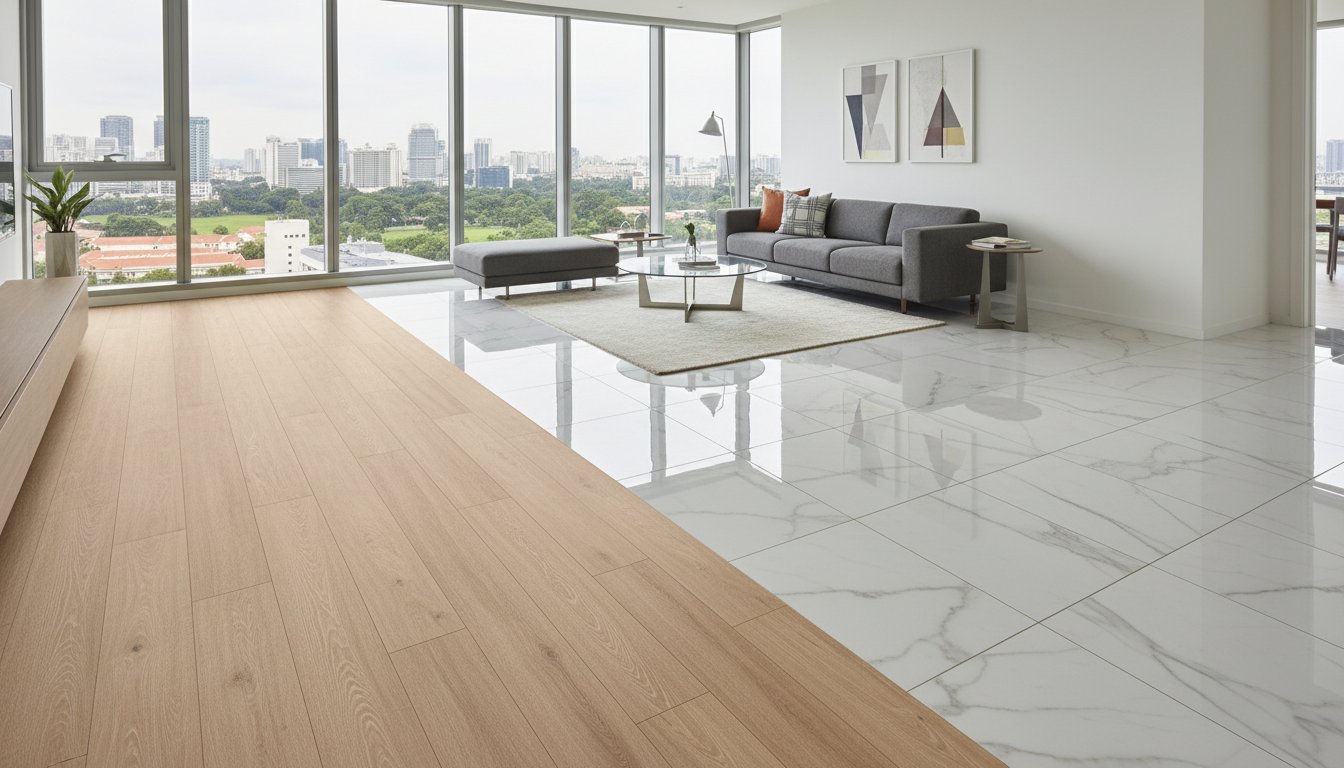
Porcelain tiles excel in achieving a flawless, glass-like finish, especially in large-format 60cm x 120cm slabs. However, they require grout lines that can disrupt the visual flow. Vinyl planks offer a tighter, nearly seamless fit. This creates a cohesive surface that expands the perceived size of a room, making it a favorite for modern minimalist apartments in areas like Orchard or Tanjong Pagar.
Underfoot Comfort and Sound Dampening
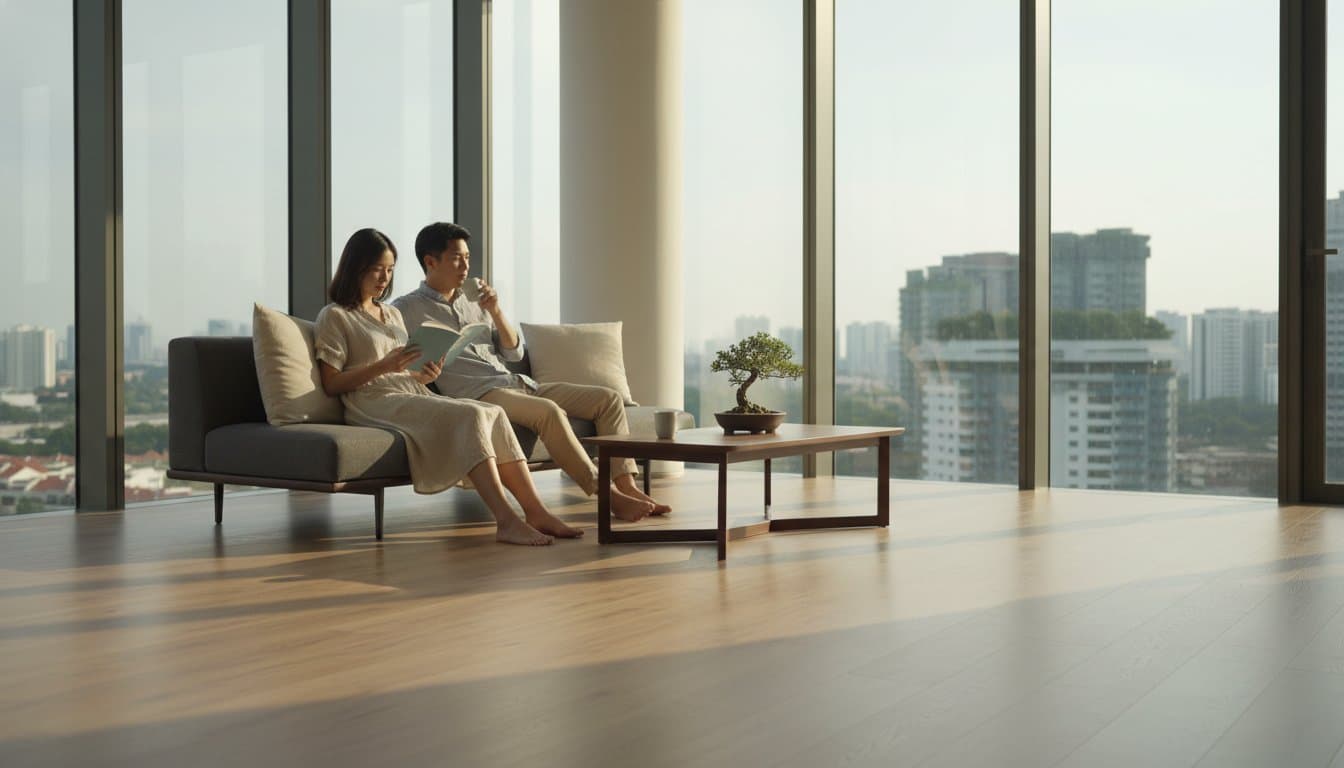
Thermal comfort is a significant differentiator in the vinyl tiles vs porcelain tiles debate. Singaporean homes often maintain an indoor temperature of 22°C to 24°C due to air-conditioning. Porcelain is a highly efficient thermal conductor; it absorbs the cold and feels icy to the touch. Vinyl acts as an insulator, remaining temperate and comfortable for bare feet throughout the day. This resilience also provides ergonomic benefits. Walking on hard porcelain for several hours can lead to joint fatigue, while the slight “give” in vinyl supports the skeletal structure, making it a healthier choice for seniors and active families.
Acoustics are equally vital in dense urban living. Hard surfaces reflect sound, which often leads to a “clicking” noise from footsteps or pets that can reach 75 decibels. Premium vinyl solutions feature sound-absorbing core layers that dampen these vibrations. This creates a “quiet luxury” environment, ensuring that movement in the living room doesn’t disturb neighbors or family members in adjacent rooms.
Practical Logistics: Installation, Maintenance, and Long-Term Value
Choosing between vinyl tiles vs porcelain tiles involves more than just selecting a pattern. It requires a strategic look at how the installation process impacts your daily life and your renovation budget. In Singapore, the “hacking” debate is a primary concern for many homeowners. Removing existing tiles can add S$800 to S$2,000 to your bill just for labor and debris disposal. Luxury Vinyl Resilient Flooring (LVRF) provides a sophisticated alternative by allowing for direct overlay. You bypass the noise, the dust, and the legal permits required for heavy hacking, making it a favorite for quick yet elegant transformations.
Repairability is another factor where these materials diverge. Porcelain is exceptionally hard, but it’s also brittle. If a heavy object falls and cracks a tile, the repair involves chiseling out the cemented piece, which often damages the surrounding grout and waterproof membrane. Click-lock vinyl systems allow a professional to replace a single damaged plank with minimal disruption. This ease of maintenance ensures your floor remains a flawless foundation for your interior design over the years.
Installation Timeframes and Complexity
Time is a luxury during any renovation. Click-lock vinyl systems are designed for speed and precision. A standard HDB living room can often be completed in a single day, allowing you to move furniture back almost immediately. Porcelain tiles require intensive wet-work. This includes cement screeding, tile setting, and grouting, a process that typically spans 4 to 6 days for a similar area. The curing process is non-negotiable; rushing it leads to hollow tiles or uneven surfaces.
Maintenance and Professional Finishing
Maintaining the pristine look of your home shouldn’t be a full-time job. The biggest struggle with porcelain is keeping grout lines white. Grout is naturally porous and absorbs spills, leading to discoloration that requires specialized steam cleaners or harsh chemicals to fix. LVRF offers a “mop and go” lifestyle. Its tight seams prevent dirt buildup, and the material is naturally resistant to the moisture levels found in Singapore’s humid climate.
To ensure a professional and premium result, the finishing details matter as much as the planks themselves. Using high-quality PVC or aluminum trims is essential. These accessories protect the edges of your flooring from impact and create a seamless transition between different rooms. Discover our range of flooring accessories to complete your space with elegance.
When analyzing the cost-benefit over a 15-year period, vinyl tiles vs porcelain tiles present different value propositions. Porcelain is a permanent fixture that can last decades, but its high initial installation cost and difficult repairs can be a drawback. Vinyl offers a lower entry price and significantly more flexibility, making it a smart, stylish investment for modern families who value both beauty and practicality. Ready to transform your home? Start your project with Nature Living Floor today.
The Final Verdict: Which Solution Suits Your Space?
Deciding between vinyl tiles vs porcelain tiles requires more than just an aesthetic preference. It demands a strategic evaluation of your lifestyle and the technical constraints of your Singapore home. To ensure your investment provides long-lasting performance, follow this expert-led decision matrix.
- Step 1: Evaluate the room’s primary function. High-moisture zones like open balconies or wet kitchens often benefit from the heat resistance of porcelain. For dry living areas and home offices, the comfort of resilient flooring is often superior.
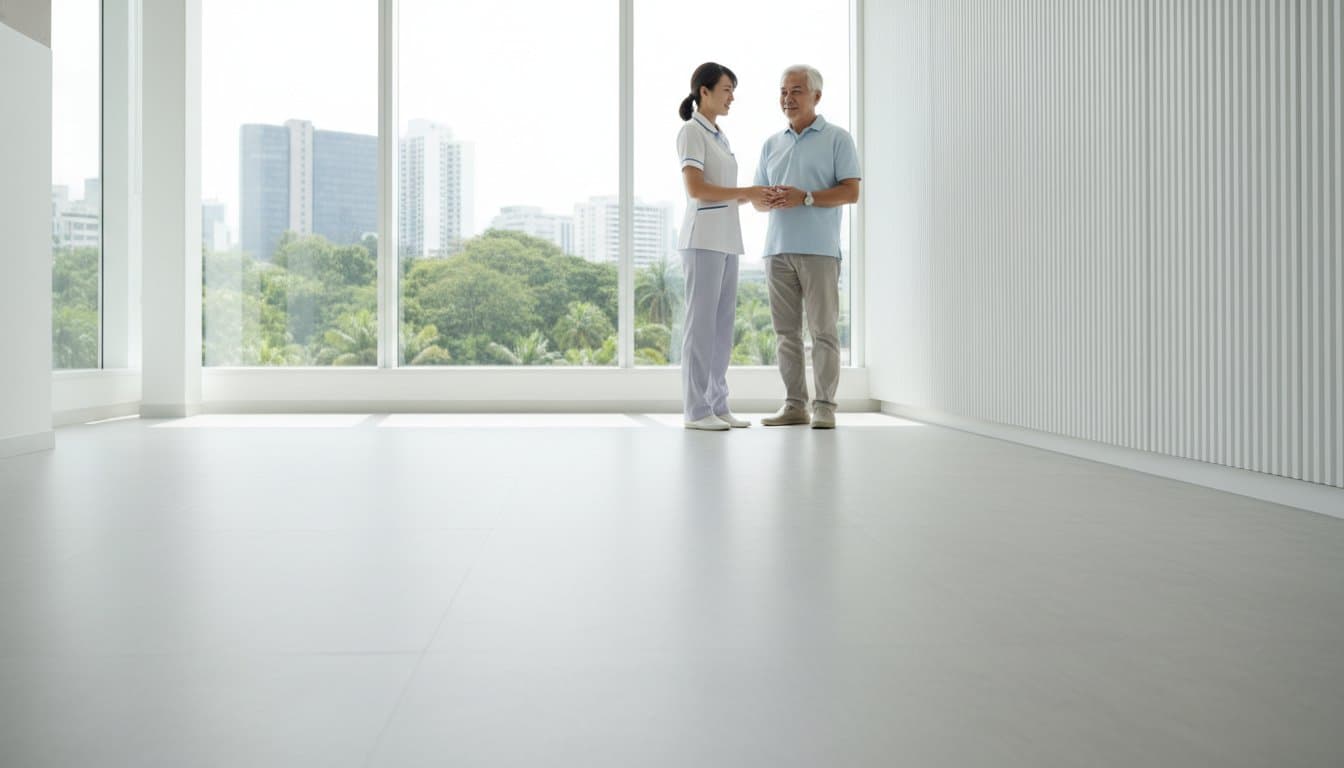
- Step 2: Consider the household members. If you have toddlers or elderly parents, slip resistance is non-negotiable. Modern LVRF (Luxury Vinyl Resilient Flooring) provides a softer landing and better grip than polished stone surfaces.
- Step 3: Assess the subfloor and height constraints. HDB renovation rules often limit the thickness of floor finishes. LVRF is significantly thinner than porcelain tiles paired with a thick cement screed, making it ideal for maintaining ceiling height.
- Step 4: Align with your long-term vision. Porcelain is a permanent fixture. If you enjoy refreshing your interior design every five to seven years, the ease of replacing LVRF makes it the more versatile choice.
At Nature Living Floor, we recommend LVRF as the premier choice for modern Singaporean living. It successfully bridges the gap between sophisticated aesthetics and the practical demands of a fast-paced lifestyle.
Room-by-Room Recommendation Guide
For living rooms and bedrooms, LVRF is the undisputed winner. Its acoustic properties reduce footfall noise by up to 20 decibels, creating a serene environment. The material feels warm underfoot, unlike the cold touch of porcelain which can be jarring in air-conditioned rooms. In wet kitchens or bathrooms where heavy scrubbing and extreme heat are common, porcelain remains a formidable contender due to its chemical resistance.
Commercial spaces benefit from a balanced approach. While porcelain handles heavy foot traffic, LVRF allows for rapid maintenance and overnight installations. This minimizes business downtime, a critical factor for retail outlets in Orchard Road or CBD offices where every hour of closure impacts the bottom line.
The Sophisticated Choice for 2026
As we look toward 2026, the perception of flooring has shifted. LVRF has evolved into a premium design element. It’s no longer viewed as a budget alternative but as a sophisticated, engineered solution. High-end collections now feature deep embossing that perfectly mimics natural timber grains and stone textures, providing a flawless finish that satisfies the most discerning designers.
Environmental responsibility is also driving this evolution. Many modern resilient floors are now 100% recyclable, aligning with Singapore’s Green Plan 2030. When you compare vinyl tiles vs porcelain tiles, consider the carbon footprint of shipping heavy stone versus lightweight, sustainable composites. Your floor is the perfect foundation for any space. Choose the one that serves your lifestyle while reflecting your commitment to quality and modern refinement.
Elevate Your Interior with a Smarter Flooring Choice
Selecting the right surface involves balancing long-term performance with daily comfort. While porcelain offers undeniable hardness, it often requires extensive subfloor preparation and installation periods that can last 3 to 5 days longer than resilient options. In contrast, Luxury Vinyl Resilient Flooring (LVRF) provides a 100% waterproof and termite-proof solution that installs efficiently over existing surfaces. When weighing vinyl tiles vs porcelain tiles, consider how the floor feels underfoot. LVRF absorbs sound and retains warmth, making it a superior choice for residential living areas where acoustics and comfort are paramount. For homeowners in Singapore, choosing LVRF means avoiding the hollow sounds and cold surfaces often associated with traditional ceramics.
As specialists in premium finishing, Nature Living Floor delivers high-performance LVRF across Singapore, Malaysia, and Myanmar. Our solutions are slip-resistant and engineered to withstand tropical humidity while maintaining a flawless appearance. we help you combine beauty with long-lasting performance to create the perfect foundation for any space. You don’t have to sacrifice elegance for durability when the right material bridges that gap effortlessly.
Explore our Premium LVRF Collections and find your perfect foundation
Your dream space is just one smart decision away.
Frequently Asked Questions
Is vinyl flooring cheaper than porcelain tiles in Singapore?
Vinyl flooring is generally more cost-effective for Singaporean homeowners. While the material costs for premium vinyl tiles vs porcelain tiles can be similar, the total investment for vinyl is lower because it doesn’t require expensive cement screeding or hacking. According to local renovation data, vinyl installation typically costs S$3 to S$7 per square foot, whereas porcelain starts from S$8 per square foot due to higher labor fees and specialized adhesive requirements.
Can I install luxury vinyl tiles over existing porcelain tiles?
You can install luxury vinyl tiles directly over existing porcelain tiles if the surface is level and grout lines are less than 3mm deep. This overlay method is a popular solution in Singapore HDB flats to avoid the S$500 to S$1,500 cost of hacking old floors. You should ensure the existing tiles are securely bonded to the subfloor to prevent the new vinyl planks from shifting or clicking over time. This approach creates the perfect foundation for any space without the mess of major construction.
Which flooring is better for homes with heavy furniture?
Porcelain tiles offer superior resistance to heavy static loads because they’re fired at temperatures reaching 1,200 degrees Celsius. While premium vinyl is resilient, heavy wardrobes or pianos can cause permanent indentations if left for years. To protect your investment, use felt pads under furniture legs. This simple step ensures your flooring remains a stylish and durable solution without unsightly pressure marks. Porcelain’s dense structure makes it a long-lasting performance choice for rooms with massive furniture pieces.
Do vinyl tiles look as realistic as real porcelain or stone?
Modern premium vinyl tiles use high-definition 3D printing and registered-embossed textures to mimic natural stone or wood flawlessly. The visual difference between luxury vinyl tiles vs porcelain tiles has narrowed significantly since 2020. For the most authentic feel, choose planks with a matte finish and micro-beveled edges. These features create a sophisticated look that captures the depth and character of genuine minerals, providing an elegant aesthetic that’s hard to distinguish from the real thing.
How do I clean luxury vinyl vs. porcelain to maintain the shine?
Maintain your floor’s elegant finish by using a pH-neutral cleaner and a damp microfiber mop. You shouldn’t use steam mops on vinyl, as temperatures exceeding 60 degrees Celsius can weaken the adhesive or core. For porcelain, a mixture of warm water and a splash of white vinegar works effectively to remove grout haze and maintain a flawless surface. Always sweep daily to prevent abrasive dust from scratching the surface. This routine ensures you combine beauty with long-lasting performance.
Is porcelain tile more durable than luxury vinyl for outdoor use?
Porcelain is the superior choice for balconies and patios in Singapore’s tropical climate. It has a water absorption rate of less than 0.5 percent, making it highly resistant to rain and intense UV exposure. Vinyl flooring can warp or fade when exposed to direct sunlight and temperatures above 30 degrees Celsius for extended periods. For outdoor solutions, select porcelain with a slip-resistance rating of R10 or higher. This ensures your outdoor area remains a safe and sophisticated extension of your home.
Does vinyl flooring contain harmful VOCs compared to tiles?
High-quality vinyl tiles are now manufactured to meet strict Singapore Green Label certifications, ensuring they emit negligible Volatile Organic Compounds (VOCs). Porcelain is naturally VOC-free because it’s made from inorganic clay and minerals. When selecting vinyl, check for a “Low VOC” or “FloorScore” label to ensure a healthy indoor environment. This choice allows you to enjoy a modern, stylish home without compromising air quality. It’s a reassuring step for families with young children or pets.
What happens if a porcelain tile cracks versus a vinyl plank?
Replacing a cracked porcelain tile requires a professional to chip out the damaged piece and re-apply mortar, which is a dusty and time-consuming process. In contrast, a damaged click-lock vinyl plank can be uninstalled and replaced in under 30 minutes without specialized tools. Always keep 5 percent extra material from your initial installation to ensure an exact color match for any future repairs. This practical advantage makes vinyl a highly resilient and convenient solution for busy households.
Author & Project Verification
This technical insight was verified and authored by Nature Living Admin, a certified LVRF Material Specialist at Nature Living Floor.
Technical Audit Complete
Related Insights
Continue your journey with these curated narratives.