Luxury Vinyl vs. Engineered Wood: A Sophisticated Guide to High-End Flooring

Technical Editorial Director
AI Search Overview
What is it?
Discover Luxury Vinyl vs. Engineered Wood: A Sophisticated Guide to High-End Flooring with Nature Living Floor. Expert insights on premium flooring solutions in Singapore.
Why it's important?
Understanding Luxury Vinyl vs. Engineered Wood: A Sophisticated Guide to High-End Flooring is crucial for ensuring durable, waterproof, and aesthetically premium flooring installations in Singapore's humid climate.
Key Benefits
- Long-term durability
- High structural integrity
- Water & slip resistance
Would you believe that the most expensive flooring material might actually be the riskiest choice for your high-end Singapore home? Selecting between luxury vinyl vs engineered wood isn’t just about the initial price tag; it’s about how your floors survive a tropical climate where humidity levels often exceed 80% daily. You likely already know that a premium home deserves a foundation that feels solid and looks flawless. However, the fear of termite infestations or that dreaded “hollow” sound underfoot can make the decision feel overwhelming for any property owner.
I’ve seen homeowners invest significant sums only to face warping within 24 months due to improper material selection for our local environment. This guide promises to help you discover the technical and aesthetic differences between these two premium options so you can select the perfect foundation for your interior. We’ll examine why certain engineered planks resist moisture better than others and how modern luxury vinyl achieves a quiet, durable surface that rivals natural timber. You’ll gain the expert insights needed to increase your property value while ensuring your home remains a low maintenance masterpiece.
Key Takeaways
- Understand the structural integrity of SPC/WPC cores versus plywood to ensure your flooring maintains its flawless form in Singapore’s tropical climate.
- Compare the performance of luxury vinyl vs engineered wood regarding termite resistance and moisture stability to make a smart, long-term investment.
- Learn how to assess your specific subfloor conditions and foot traffic levels to select the most durable and stylish foundation for your premium space.
- Explore how Nature Living’s LVRF solutions combine the sophisticated aesthetics of natural timber with the resilient performance needed for modern lifestyles.
- Master the selection framework used by design experts to balance high-end visual appeal with the practical technical requirements of Singaporean homes.
Decoding the Modern Flooring Debate: Luxury Vinyl vs. Engineered Wood
Singapore’s luxury property market in 2026 demands more than just aesthetic appeal. Homeowners now seek a flawless balance between sophisticated design and high-performance durability. Choosing between luxury vinyl vs engineered wood isn’t just a technical decision; it’s about selecting the perfect foundation for any space. This choice defines the long-term value and comfort of your home. Modern design solutions have evolved past simple material mimicry, moving toward precision-engineered surfaces that handle our tropical climate with ease.
To better understand this concept, watch this helpful video:
What is Luxury Vinyl Resilient Floor (LVRF)?
Luxury Vinyl Resilient Floor (LVRF) represents the pinnacle of synthetic flooring technology. Unlike traditional, thinner vinyl planks, LVRF features a rigid, multi-layered core that prevents telegraphing from the subfloor. It uses a high-definition decorative layer to capture the intricate grain patterns of natural timber. This premium solution combines beauty with long-lasting performance, making it ideal for high-traffic areas. It’s waterproof and incredibly stable, providing a reassuring investment for modern living.
- Multi-layer construction: Includes a rigid core, a high-definition print layer, and a protective wear layer.
- Aesthetic depth: Modern printing mimics the texture and color variations of oak, walnut, and teak.
- Professional Tip: Look for LVRF with a minimum 0.5mm wear layer for commercial-grade durability in residential settings. This ensures the surface remains flawless against heavy foot traffic and pets.
The Anatomy of Engineered Wood
Engineered wood provides the timeless warmth of authentic timber without the instability of solid planks. The top layer, or lamella, consists of genuine hardwood, while the base utilizes a complex Engineered Wood Composition of plywood or high-density fiberboard. This cross-grain construction is vital for Singapore’s humidity. It restricts the natural expansion and contraction that often plagues solid wood. It’s a stylish choice for those who prioritize the tactile feel of real timber.
- Structural stability: The plywood core layers are glued in opposing directions to neutralize wood’s natural movement.
- Authentic veneer: The lamella thickness typically ranges from 2mm to 6mm, impacting the floor’s longevity.
- Maintenance limits: Be aware that thinner veneers cannot be sanded and refinished multiple times. If you plan for a legacy home, choose a thicker lamella that allows for at least two professional sandings over its lifespan.
The shift in 2026 is clearly toward performance-driven luxury. Whether you choose the resilient nature of LVRF or the organic elegance of engineered wood, your decision should align with your lifestyle needs. Visit Nature Living Floor to explore how these materials can transform your interior into a stunning masterpiece.
The Technical Blueprint: Comparing Composition and Construction
Choosing between luxury vinyl vs engineered wood requires a look beneath the surface. While both offer a premium aesthetic, their internal architectures serve different lifestyle needs. Recent Flooring Market Trends indicate a significant shift toward rigid core technologies that provide superior dimensional stability in tropical climates like Singapore. This structural integrity defines how your floor handles heavy furniture, foot traffic, and the island’s high humidity levels.
Core Stability: Stone Plastic Composite (SPC) vs. Wood Plywood
The core serves as the engine of your flooring. Luxury vinyl, specifically Stone Plastic Composite (SPC), utilizes a blend of natural limestone powder and stabilizers. This creates a high-density, rigid plank that’s virtually impervious to expansion or contraction. In contrast, engineered wood features a core of layered plywood or high-density fiberboard (HDF). Because wood is naturally hygroscopic, it absorbs and releases moisture; this can lead to minor swelling or gaps if the indoor environment isn’t climate-controlled. SPC cores are 100% waterproof, making them a flawless solution for kitchens or ground-floor units where moisture ingress is a risk.
Actionable Tip: Verify the core density (kg/m3) before purchasing. For maximum indentation resistance in a busy Singaporean household, look for an SPC core with a density of at least 1,900 to 2,100 kg/m3.
Surface Aesthetics and Texture
Modern manufacturing has narrowed the visual gap between synthetic and natural materials. High-end luxury vinyl uses Embossed in Register (EIR) technology. This process aligns the physical texture of the plank with the visual grain of the high-definition print film. When you touch a knot or a cathedral grain, it feels exactly where it looks. Engineered wood remains the gold standard for authenticity, featuring a genuine timber veneer as the top layer. This provides a unique, non-repeating pattern that only nature can produce. When exploring the various types of vinyl flooring, prioritize planks with a 0.5mm wear layer or higher to ensure the sophisticated texture remains intact for decades.
Environmental Impact and Installation
Sustainability and health are foundational to a stylish home. Most premium engineered wood products use FSC-certified timber and meet E0 or E1 VOC emission standards. Luxury vinyl has also evolved; many modern options are phthalate-free and recyclable. Installation methods differ significantly between the two. Luxury vinyl typically features advanced click-lock systems for a floating installation. This is fast and clean. Engineered wood often uses tongue-and-groove joinery, which might require professional gluing or nailing to the subfloor for a solid, silent feel underfoot. If you’re looking for a swift renovation, the click-lock mechanism of vinyl is often the more efficient choice.
Discover how these technical specifications can transform your space into a stunning masterpiece by viewing our premium flooring solutions.

The Performance Showdown: The Tropical Stress Test
Singapore’s climate presents a unique set of challenges for any interior surface. With average relative humidity levels often exceeding 80%, the debate between luxury vinyl vs engineered wood hinges on how these materials react to moisture and heat. Selecting the wrong foundation can lead to costly repairs within just 24 to 36 months of installation. Homeowners must prioritize materials that can withstand the rigors of a tropical environment without sacrificing aesthetic elegance.
Waterproof vs. Water-Resistant
Engineered wood is designed for stability, but it remains a water-resistant product rather than a waterproof one. During monsoon seasons, the natural wood top layers can absorb atmospheric moisture, leading to “cupping” where the edges of the planks rise. In extreme cases, “crowning” occurs as the center swells. For homeowners seeking a truly waterproof flooring option, Luxury Vinyl Rigid Flooring (LVRF) provides a sophisticated solution that remains dimensionally stable even in 100% humidity. It doesn’t warp or swell, making it the ideal choice for kitchens and entryways where moisture is a constant factor.
Termite Resistance and Pest Control
Termites remain a persistent threat in Singapore, particularly for ground-floor units and landed estates. Engineered wood contains organic cellulose that can attract subterranean termites if protective barriers fail. This often necessitates expensive annual pest control injections or pre-treatment sprays that add to the floor’s lifetime cost. LVRF offers a biological advantage because its core is entirely inorganic. Inorganic materials are the safer bet for Southeast Asian homes because they remove the food source entirely, eliminating the risk of structural pest damage. This comparison is explored further in this Complete Buyer’s Decision Guide, which highlights the long-term maintenance savings of synthetic cores over traditional timber products.
Quiet Luxury: Acoustic Comfort Underfoot
Living in high-rise apartments requires a focus on acoustic engineering to maintain a peaceful environment. The “click-clack” sound of hard shoes on engineered wood can be disruptive to neighbors below. High-end luxury vinyl often features integrated IXPE (Irradiated Cross-Linked Polyethylene) or cork underlays that dampen impact noise significantly. This creates a “soft-step” feel that balances resilience with silence. When comparing luxury vinyl vs engineered wood, it’s also vital to consider the maintenance cycle. While wood requires specialized oils and periodic refinishing, LVRF maintains its flawless appearance with simple, pH-neutral cleaning.
A Designer’s Selection Framework: Choosing for Your Specific Space
Selecting the right flooring requires a blend of aesthetic vision and technical precision. When you weigh luxury vinyl vs engineered wood, you’re choosing the architectural soul of your home. It’s about finding the perfect foundation that balances daily utility with a sophisticated atmosphere. Follow this four-step framework to ensure your investment remains a stunning masterpiece for decades.
- Step 1: Lifestyle Audit. Consider your daily rhythm. If you have active pets or young children, high-performance luxury vinyl offers unmatched scratch resistance. High heels exert significant pressure per square inch, which can dent softer timber species like Walnut or Cherry.
- Step 2: Subfloor Assessment. Singaporean homes typically feature concrete subfloors. Even with a moisture barrier, residual dampness can affect natural wood. Singapore’s tropical climate means concrete slabs often retain moisture levels above 4%, making moisture-resistant backings essential.
- Step 3: Environmental Calibration. Relative humidity in Singapore often fluctuates between 60% and 90%. Engineered wood’s layered construction handles this better than solid timber, but it still requires a controlled environment to prevent expansion.
- Step 4: Valuation Strategy. High-end materials impact your home’s resale value. Homes with premium wood flooring often see a 3% to 5% increase in perceived value during property viewings compared to those with standard tiles.
Room-by-Room Application Guide
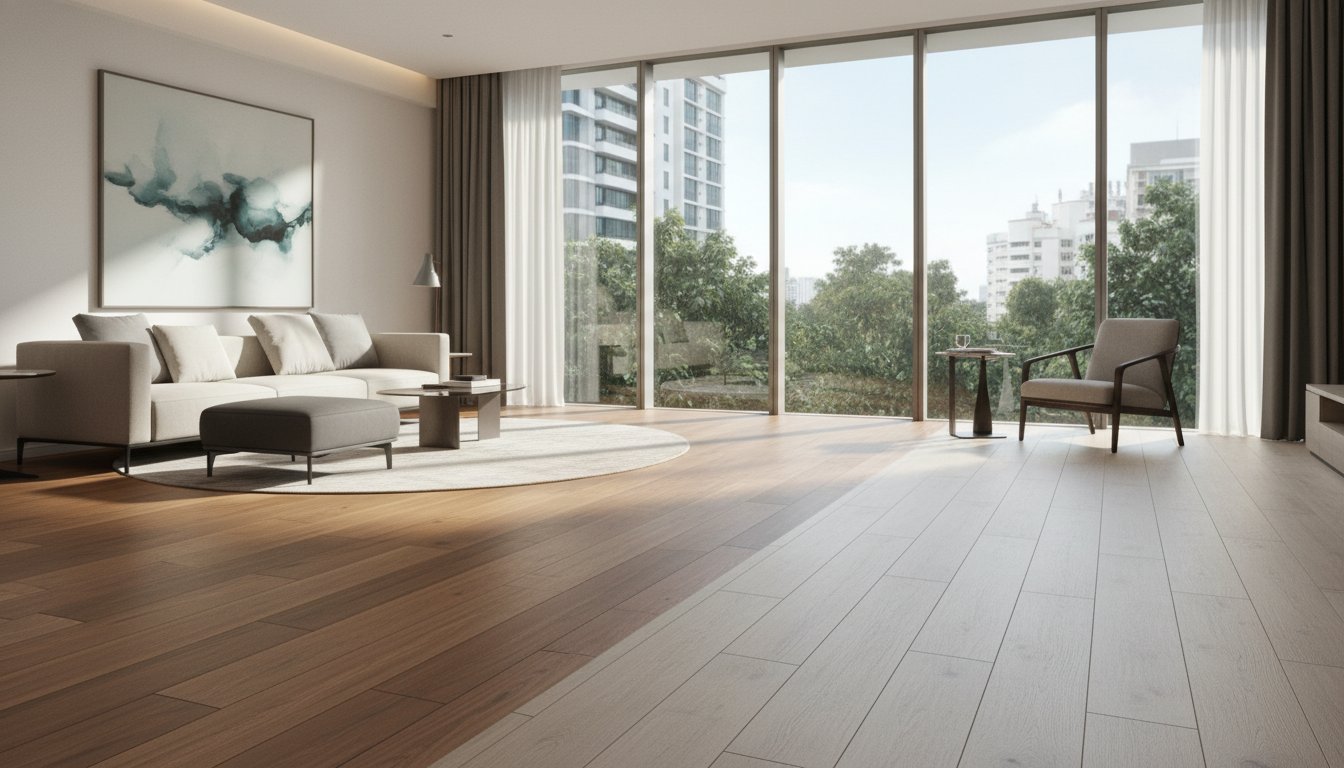
Your choice should reflect the specific demands of each zone. LVRF is the non-negotiable choice for kitchens, laundry areas, and entryways where spills and moisture are frequent. It provides a waterproof, flawless finish that withstands heavy foot traffic. Conversely, an executive study or a master bedroom is the perfect setting for the warmth of engineered wood. For a cohesive look, use a slim transition trim to bridge the gap between different materials. This allows you to enjoy the organic texture of wood in low-traffic areas while maintaining practical luxury elsewhere.
The Cost-Benefit Analysis
Initial installation costs tell only half the story. While premium LVRF is cost-effective upfront, its true value lies in its 20-year lifecycle. It requires zero specialized maintenance beyond regular cleaning. Engineered wood carries hidden costs, such as professional refinishing every 8 to 12 years, which can cost 15% to 20% of the original installation price. High-end luxury vinyl maintains its like-new appearance longer without the risk of fading from UV exposure. If you prioritize a maintenance-free lifestyle, LVRF is the superior long-term solution. Comparing luxury vinyl vs engineered wood shows that while wood offers prestige, vinyl offers a resilient and waterproof alternative that doesn’t compromise on style.
Ready to find the perfect foundation for your home? Explore our premium flooring solutions to see how we combine beauty with long-lasting performance.
Elevating Your Interior with Nature Living’s LVRF Solutions
Choosing between luxury vinyl vs engineered wood often comes down to balancing tactile warmth with everyday resilience. At Nature Living Floor, we bridge this gap by offering LVRF (Luxury Vinyl Resilient Flooring) solutions that mirror the organic grain of timber while providing 100% waterproof performance. Our curated collections feature 9-inch wide planks and intricate herringbone patterns, allowing homeowners to achieve a high-end architectural look without the maintenance burden of traditional wood. We focus on premium materials that meet designer aesthetics, ensuring every plank reflects the quality expected in a luxury residence.
A high-end floor is only as good as its installation and finishing details. We provide professional-grade accessories, including matching skirtings and transition profiles, to ensure a flawless finish across every doorway and wall edge. This attention to detail makes our LVRF the perfect foundation for any space, whether it’s a minimalist penthouse in Orchard Road or a busy family home. Our systems are engineered to withstand the humid Singapore climate, preventing the warping or gapping issues sometimes associated with natural timber products.
The Aesthetic Versatility of LVRF
Our design philosophy centers on modern refinement and sophisticated palettes. We’ve developed textures ranging from cool Nordic greys to deep, amber oaks that capture the essence of nature. By choosing our premium vinyl flooring, you’re investing in a surface that resists UV fading and heavy foot traffic. It’s this combination of style and durability that transforms ordinary rooms into stunning masterpieces. Every collection is designed to complement contemporary furniture and high-end finishes, providing a cohesive look that elevates the entire property value.
Actionable Next Steps for Your Project
Selecting the right floor requires both digital precision and tactile experience. You can use our Product Visualizer to see how different grains and colors interact with your specific room layout and lighting. It’s a powerful tool for narrowing down your design choices before committing to a full installation. For a more hands-on approach, we encourage you to follow these steps:
- Request Samples: Order physical samples to evaluate the embossed-in-register textures and color accuracy under your home’s lighting conditions.
- Consult Our Experts: Visit our showrooms in Singapore, Klang, or Yangon to speak with specialists who understand local building requirements and subfloor preparation.
- Review Technical Specs: Compare wear layer thicknesses and acoustic ratings to ensure the floor meets the specific demands of your lifestyle.
Our team is ready to help you navigate the nuances of luxury vinyl vs engineered wood to find the solution that fits your vision. Visit us today to start building your space on a foundation of quality and elegance.
Elevate Your Space with a Foundation Built for Singapore
Selecting the right material in the luxury vinyl vs engineered wood debate depends on your lifestyle priorities and the specific demands of your home. While engineered wood brings a classic feel, it often requires intensive maintenance to combat Singapore’s 80% average relative humidity. Nature Living’s LVRF solutions bridge this gap, offering the visual depth of natural timber with the resilience of modern engineering. For the best results, prioritize materials with a slip-resistant rating to ensure safety in every room of your house.
Our premium flooring is 100% waterproof and termite-proof, making it a reliable investment for any high-end project. You can experience these sophisticated textures firsthand at our physical showrooms in Singapore, Malaysia, and Myanmar. We focus on delivering solutions that combine beauty with long-lasting performance, ensuring your interior remains flawless. It’s time to choose a floor that handles the tropical climate as gracefully as it complements your decor.
Explore our Premium LVRF Collections and find your perfect foundation
You’re now ready to transform your home into a stunning masterpiece that stands the test of time.
Frequently Asked Questions
Is luxury vinyl actually as durable as engineered wood?
Luxury vinyl offers superior resistance to moisture and scratches compared to the delicate top layer of engineered wood. In Singapore’s 80% average humidity, LVRF won’t swell or warp like natural timber. High-end vinyl features a 0.55mm wear layer that withstands heavy foot traffic easily. It’s the ideal solution for high-moisture areas like kitchens or laundry rooms where engineered wood might eventually fail or discolor.
Can luxury vinyl flooring increase the resale value of my home?
Premium flooring choices can increase a property’s valuation by 3% to 7% depending on the material quality and installation. While engineered wood carries a higher prestige, luxury vinyl vs engineered wood comparisons show that LVRF’s durability keeps a home looking new for longer. This visual appeal is crucial during HDB or private condo viewings where first impressions dictate the final offer price and buyer confidence.
How do I tell the difference between cheap vinyl and LVRF?
You can identify premium LVRF by its rigid core and a minimum thickness of 5mm. Cheap vinyl is often thin, flexible, and lacks the deep, textured grain found in high-end collections. Inspect the wear layer specifications; professional-grade solutions always provide a 0.5mm layer or thicker. This ensures the floor remains flawless even after a decade of use, providing a durable and stylish foundation for your home.
Is engineered wood better for underfloor heating than luxury vinyl?
Engineered wood is the superior choice for underfloor heating due to its excellent thermal conductivity and structural stability. Its multi-layered base minimizes the natural expansion and contraction caused by heat. If you choose luxury vinyl, verify it’s rated for temperatures up to 27 degrees Celsius. Always use a professional installer to ensure the adhesive doesn’t de-bond during the heating cycle, preserving your investment’s long-term integrity.
Does luxury vinyl flooring look like real wood in 2026?
Advanced 3D printing and Embossed-in-Register (EIR) technology make 2026 luxury vinyl look and feel identical to real timber. The texture perfectly aligns with the visual grain, creating a stunning masterpiece underfoot. Modern manufacturing has reduced pattern repeats to 1 in 25 planks. This variety ensures your floor looks organic and unique, providing a sophisticated foundation for any modern interior without the maintenance of natural wood.
How do I maintain LVRF compared to engineered wood?
Maintaining LVRF requires only a pH-neutral cleaner and a damp mop, making it significantly easier than caring for engineered wood. You don’t need to worry about water spills or humidity fluctuations. For engineered wood, use a dry microfiber mop and avoid steam cleaners. Apply a specialized wood refresher every 12 months to maintain the elegant luster and protect the natural veneer from drying out.
What happens if a luxury vinyl plank gets damaged?
You can easily replace a single damaged plank if your floor uses a click-lock system. Simply unzip the planks from the nearest wall or use a specialized tool to lift the damaged section. It’s a quick, cost-effective solution that doesn’t require professional refinishing. Always store two boxes of spare planks from your original batch to ensure a perfect color match during repairs as dye lots can change.
Which flooring is more eco-friendly: engineered wood or LVRF?
Engineered wood is the more eco-friendly option because it’s sourced from sustainable forests and acts as a carbon sink. It uses about 70% less slow-growing hardwood than solid planks. To ensure a green choice in Singapore, look for the Singapore Green Label or FSC certification. Some premium vinyl brands now incorporate 30% recycled materials, but natural timber remains the gold standard for environmental sustainability.
Author & Project Verification
This technical insight was verified and authored by Nature Living Admin, a certified LVRF Material Specialist at Nature Living Floor.
Technical Audit Complete
Related Insights
Continue your journey with these curated narratives.