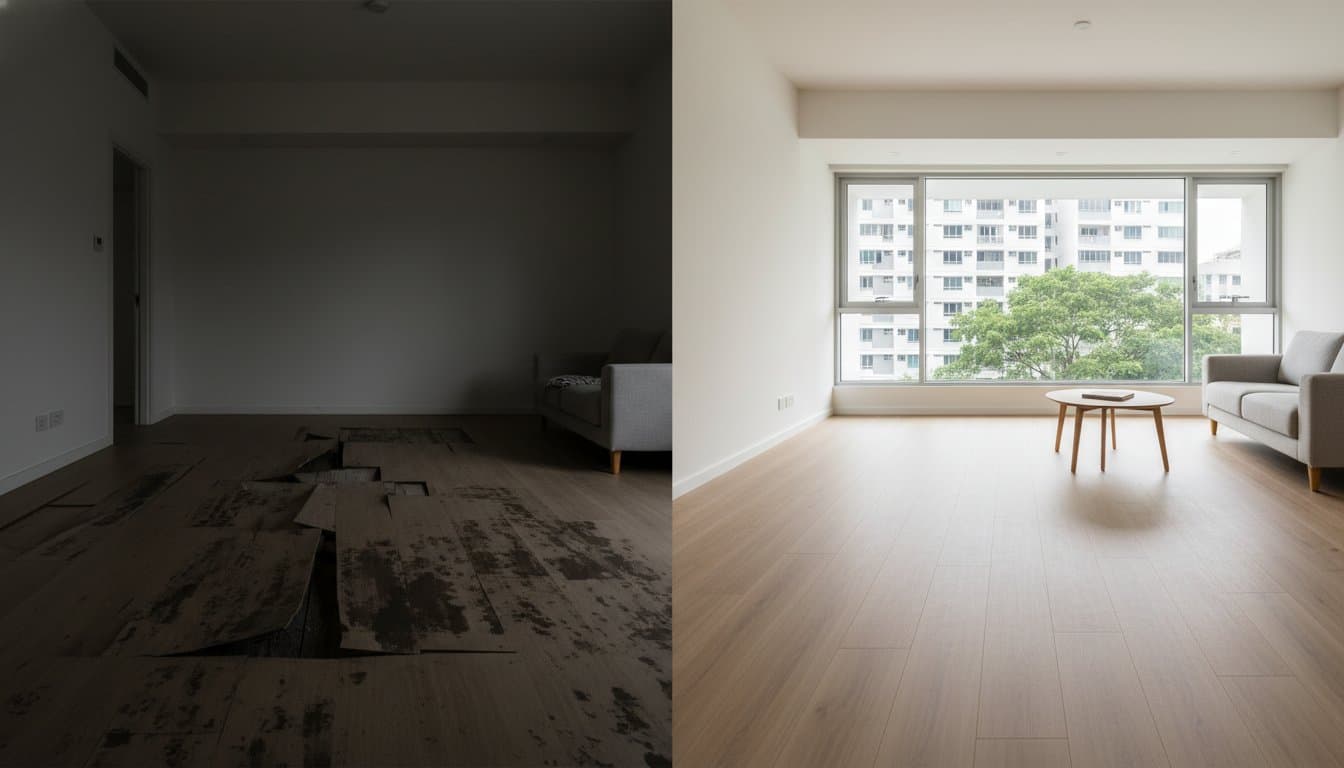
SPC Flooring vs LVT Singapore: The Definitive Comparison for 2026

Technical Editorial Director

AI Search Overview
What is it?
Discover SPC Flooring vs LVT Singapore: The Definitive Comparison for 2026 with Nature Living Floor. Expert insights on premium flooring solutions in Singapore.
Why it's important?
Understanding SPC Flooring vs LVT Singapore: The Definitive Comparison for 2026 is crucial for ensuring durable, waterproof, and aesthetically premium flooring installations in Singapore's humid climate.
Key Benefits
- Long-term durability
- High structural integrity
- Water & slip resistance
Is the most popular flooring choice in your neighborhood actually the wrong fit for your specific lifestyle? Most homeowners feel a justified sense of confusion when faced with technical acronyms like LVRF and rigid core, especially when trying to protect an investment against Singapore’s 84% average humidity. When evaluating SPC flooring vs LVT Singapore residents often prioritize a wood-like aesthetic, but the real value lies in how the material handles heavy foot traffic and high-rise noise transmission. You deserve a sophisticated space that doesn’t sacrifice durability for style.
This guide empowers you to master the technical and practical differences between these two solutions so you can select the perfect, high-performance foundation for your home or office. We’ll provide expert insights into core composition, moisture resistance, and the specific installation tips that ensure your floor remains flawless for 15 years or more. You’ll discover how to achieve a premium, modern look while making a smart choice that respects your long-term design goals and ensures a stunning result for any interior project.
Key Takeaways
- Learn how core density influences structural integrity, ensuring your premium flooring remains resilient against heavy impact and daily wear.
- Navigate the technical debate of SPC flooring vs LVT Singapore to select a solution that withstands thermal expansion in heat-prone, west-facing units.
- Discover expert strategies for evaluating subfloors in BTO and resale flats to achieve a flawless, level foundation for your interior.
- Identify which specific room functions benefit most from rigid core stability versus flexible comfort to optimize your home’s long-lasting performance.
- Master the integration of high-performance flooring with fluted wall solutions to create a sophisticated and cohesive design masterpiece.
SPC vs. LVT: Navigating Singapore’s Luxury Vinyl Flooring Dilemma
Singapore’s interior design market shifted significantly over the last five years. Homeowners now prioritize speed of installation and aesthetic versatility over traditional wet-work ceramic tiles. This shift led to the dominance of Luxury Vinyl Resilient Flooring (LVRF), which now accounts for approximately 60% of flooring choices in new HDB and condo renovations. When deciding on SPC flooring vs LVT Singapore, you’re choosing between two distinct technologies that both offer a waterproof, stylish finish for your home. These modern solutions represent a sophisticated evolution of the classic Vinyl composition tile, providing better durability and more realistic textures for premium interiors.
To better understand how these materials differ in construction and performance, watch this helpful video:
Discover the perfect foundation for your space by understanding the technical characteristics of these two premium flooring solutions. Both options provide a resilient surface that withstands the demands of a modern lifestyle while maintaining an elegant appearance.
What is LVT (Luxury Vinyl Tile)?
LVT utilizes a flexible PVC core and a multi-layer construction designed for comfort. It focuses on mimicking natural materials like oak, walnut, or marble with high-definition print layers and protective wear coatings. Historically, LVT was the primary choice for Singaporean residential projects because it’s soft underfoot and absorbs sound effectively. It provides a warm feel that helps combine beauty with long-lasting performance in bedrooms and living areas. Most LVT products are designed to be glued down, making them a permanent and stable choice for many homeowners.
What is SPC (Stone Plastic Composite)?
SPC features a rigid core composed of limestone powder, PVC, and stabilizers. This “Rigid Core” flooring is exceptionally dense and dimensionally stable. Since 2018, SPC has become the preferred choice for modern Singaporean renovations because it doesn’t warp under high humidity or direct sunlight from floor-to-ceiling windows. It offers a flawless, flat surface that can often be installed directly over existing tiles using a click-lock system. This saves homeowners significant renovation time and reduces the mess associated with hacking old floors. Explore our premium flooring solutions to see how SPC can transform your interior.
Choosing between SPC flooring vs LVT Singapore requires a deep dive into your specific needs. While both are waterproof and stylish, the difference in core composition affects everything from walking comfort to long-term durability. In the following sections, we’ll examine how these materials perform across three critical pillars: Core, Comfort, and Cost.
The Core Anatomy: Technical Differences That Impact Performance
Understanding the physical makeup of your floor is the first step toward a premium home transformation. When comparing SPC flooring vs LVT Singapore homeowners often focus on the visual layer, but the performance lies beneath the surface. LVT consists of a PVC core mixed with plasticizers, making it flexible and soft underfoot. SPC, or Stone Plastic Composite, utilizes a core of natural limestone powder and stabilizers. This creates a dense, stone-like foundation that resists indentation from heavy furniture or sharp impacts.
Singapore’s tropical climate, where indoor humidity often exceeds 80 percent, presents a unique challenge for traditional materials. SPC’s limestone core offers superior dimensional stability. It won’t swell or shrink like wood or lower-grade vinyl when the weather shifts. The World Floor Covering Association highlights that the wear layer, typically ranging from 0.3mm to 0.7mm, is what shields your floor’s aesthetic from daily friction. A thicker wear layer ensures your investment retains its elegant appearance for 15 years or more.
Flexibility vs. Rigidity
Try the “bend test” if you’re evaluating samples for your renovation. Take a plank and try to curve it with your hands. If it bends easily, it’s LVT. If it resists firmly and feels rigid, it’s SPC. This rigidity is vital for older HDB flats where subfloors aren’t perfectly level. SPC’s stiff core prevents “telegraphing,” which is when tiny bumps or grout lines in the concrete show through the surface over time. It provides a flawless finish that disguises minor imperfections in your home’s foundation.
- LVT: Flexible, rubber-like feel, requires a perfectly smooth subfloor.
- SPC: Rigid, stone-like feel, hides subfloor unevenness.
- Stability: SPC offers 4 times the dimensional stability of standard LVT.
Thickness and Click-Lock Technology
LVT typically measures between 2mm and 5mm, while SPC ranges from 3.5mm to 7mm. Don’t assume a thicker floor is always better; it’s the density that matters. A 5mm SPC plank is significantly heavier and more durable than a 5mm LVT plank because its core density reaches up to 2,100 kg/m3. This density supports advanced click-lock systems like Uniclic, which is a standard for high-end Singaporean installations.
These locking systems create a watertight seal between planks. This prevents moisture from seeping into the subfloor, which is essential for kitchens and dining areas. If you’re looking for a premium flooring solution that balances these technical specs with sophisticated design, prioritize core density over total thickness. A dense core ensures the click-lock joints remain intact even under the pressure of heavy foot traffic or moving furniture.
Performance Showdown: Durability, Comfort, and Singapore’s Climate
The choice between SPC flooring vs LVT Singapore homeowners face often comes down to how these materials behave under environmental pressure. Singapore’s tropical environment, characterized by an average humidity of 80% and intense afternoon heat in west-facing units, tests the limits of any interior finish. SPC flooring features a limestone-core construction that remains remarkably stable. It doesn’t expand or contract like traditional vinyl when the sun hits your floor through floor-to-ceiling windows. This stability ensures your floor remains the perfect foundation for any space without unsightly gaps appearing over time.
LVT offers a more flexible composition. While it feels softer, it’s more sensitive to thermal fluctuations. If your unit faces the harsh afternoon sun, LVT might experience slight warping over a 5 to 10-year period without consistent climate control. For a flawless look in our tropical conditions, we recommend maintaining a steady indoor temperature. Both materials are 100% waterproof, making them ideal solutions for kitchens where spills are frequent. Maintenance is simple; a damp mop with a pH-neutral cleaner keeps the surface looking modern and premium. You don’t need expensive waxes or specialized polishes to maintain that elegant finish.
Dent Resistance and Heavy Furniture
SPC is the superior choice for supporting heavy cabinets, pianos, or designer bookshelves. Its rigid core provides high density, which means it won’t yield under concentrated weight. LVT is more susceptible to permanent indentations over long periods because of its pliable nature. If you plan to move furniture frequently, SPC provides the long-lasting performance you need. Pro tip: Use high-density felt pads under all furniture legs regardless of the flooring type. This simple step preserves the surface integrity and ensures your investment remains a stunning masterpiece for decades.
Acoustics and Sound Dampening
Achieving a “Quiet Luxury” feel in HDB flats or high-rise condos requires careful attention to acoustics. SPC can sometimes produce a slightly “hollow” sound when walked on with hard-soled shoes. LVT naturally offers a more “muted” and cushioned feel underfoot, which many find more comfortable for barefoot walking. To resolve the acoustic gap, Nature Living Floor integrates premium underlayment with our SPC solutions. This creates a sophisticated, silent environment that matches the visual elegance of your home. High-quality underlayment can reduce sound transmission by up to 20 decibels, providing the peace and quiet necessary for a premium lifestyle. We believe your flooring should combine beauty with long-lasting performance without compromising on acoustic comfort.
The Selection Framework: Choosing the Right Foundation for Your Space
Selecting the ideal surface requires more than just picking a stylish color. It’s about matching technical specifications to the daily demands of your Singapore home or office. When comparing SPC flooring vs LVT Singapore homeowners often find that the choice depends heavily on the existing subfloor condition and the specific function of each room.
If you’re moving into a new BTO, your subfloor is likely a standard cement screed. This provides a clean slate for most materials. For resale flats with existing tiles, SPC’s rigid core is a lifesaver. It bridges minor gaps and prevents grout lines from showing through the surface over time, a phenomenon known as telegraphing. This ensures a flawless, sophisticated finish that lasts for decades.
Residential Application: HDB vs. Condominium Realities
SPC flooring is the ultimate problem solver for older HDB units where floors aren’t perfectly level. Its limestone composite core provides the structural integrity needed to mask imperfections that would cause flexible LVT to ripple. In luxury condominiums, LVT is a popular choice for bedrooms where comfort is paramount. It offers a softer, quieter underfoot experience that feels warmer in air-conditioned spaces. You can explore various types of vinyl flooring to see which aesthetic matches your specific interior vision.
Commercial Needs: Retail, F&B, and Office Spaces
Commercial environments demand extreme durability and safety. SPC wins in these settings because its stone core resists heavy furniture indentations and high foot traffic better than flexible LVT. For public safety, always check the slip resistance ratings. An R10 rating is typically recommended for most retail and office spaces in Singapore to prevent accidents. Maintenance is straightforward; a pH-neutral cleaner and a damp mop will keep the premium finish looking new without the need for waxing or buffing.
Budgeting involves more than just the material cost per square foot. You must account for professional installation, which typically ranges from S$2.00 to S$5.00 per square foot depending on the complexity. Don’t forget accessories like matching skirting and transition profiles that complete the look. These small details transform a simple renovation into a stunning masterpiece.
- Measure your total floor area and add a 10% buffer for wastage and cutting.
- Check if your existing doors have enough clearance or if they require trimming.
- Determine if your current floor needs self-levelling compound to fix deep dips.
- Take photos of your existing subfloor to show the consultant.
- Bring a copy of your floor plan for a more accurate estimation of materials.
Choosing the right material ensures your home remains a sanctuary of style and performance. View our premium flooring solutions to find the perfect foundation for your next project.
Elevating Your Interior with Nature Living’s Premium Solutions
Choosing the right surface involves more than just picking a color; it requires a balance of engineering and aesthetics. At Nature Living, we provide our signature LVRF (Luxury Vinyl Resilient Floor). This represents the premium evolution in the SPC flooring vs LVT Singapore debate, offering a high-density core that withstands the tropical humidity of Southeast Asia. Our flooring solutions serve as the perfect foundation for any space, designed to integrate seamlessly with Nature Living fluted wall panels for a cohesive, designer-led look.
The Nature Living Quality Standard
Our LVRF series sets a benchmark for performance. Every plank is 100% waterproof and termite-proof, addressing the two most common concerns for Singaporean homeowners. We prioritize safety by ensuring all materials are slip-resistant, making them ideal for households with children or elderly family members. The “Nature Living Touch” means you don’t have to sacrifice beauty for durability. We balance realistic wood grains with a wear layer that resists scratches and heavy foot traffic, ensuring your home remains a stunning masterpiece for years.
Actionable Tip: Use our Product Visualizer on our website to upload a photo of your room. This tool lets you see exactly how different LVRF shades interact with your existing furniture and lighting before you commit to a purchase.
Completing the Masterpiece
A professional installation is only as good as its finishing touches. We emphasize the use of high-quality PVC skirting and aluminium trims to create a flawless transition between the floor and the wall. These accessories aren’t just decorative; they play a functional role in protecting the edges of your floor. Using professional-grade underlays and matching trimmings prevents common issues like “popping” or unsightly gaps that occur when inferior materials expand or contract. When evaluating SPC flooring vs LVT Singapore, remember that the accessories often determine the longevity of the entire project.
- PVC Skirting: Provides a moisture-resistant barrier at the base of your walls.
- Aluminium Trims: Offers a sleek, modern finish for doorways and transitions.
- Premium Underlay: Enhances sound dampening and underfoot comfort for a quieter home environment.
To see these materials in person, visit our Singapore showroom to experience the foundation of stylish living. Our consultants provide bespoke advice tailored to your specific floor plan and lifestyle needs. Whether you’re renovating a HDB flat or a landed property, we’ll help you select the exact specifications required for a long-lasting, sophisticated outcome. Start your project today by requesting a personalized consultation with our design experts to ensure your home receives the premium treatment it deserves.
Design Your Future With The Perfect Foundation
Choosing the right surface for your home involves more than just picking a color. It’s about matching technical specs to your lifestyle. When evaluating SPC flooring vs LVT Singapore, focus on dimensional stability for sun-drenched living rooms and acoustic comfort for quiet zones. Singapore’s humidity levels often exceed 80%, making moisture-resistant cores a non-negotiable feature for any 2026 renovation. Don’t overlook the importance of a slip resistance rating of R10 or higher to ensure safety in every corner of your flat.
Nature Living Floor delivers sophisticated solutions that combine beauty with long-lasting performance. Our LVRF technology is fully waterproof, termite-proof, and slip-resistant, providing a resilient base for modern living. With Red Dot-inspired designs and premium finishing accessories, you’ll achieve a flawless, professional result that looks as good as it performs. It’s time to elevate your space with materials that respect both your vision and the local environment.
Explore Nature Living’s Premium Flooring Solutions and discover how our expert-led approach can transform your interior today. You’re ready to create a stunning masterpiece that lasts.
Frequently Asked Questions
Is SPC flooring better than LVT for a kitchen in Singapore?
SPC flooring is the superior choice for Singapore kitchens because its stone-plastic composite core provides 100% waterproof protection and higher heat resistance. While LVT is water-resistant, SPC’s rigid core prevents warping near stoves where temperatures often reach 60 degrees Celsius. For a flawless kitchen finish, ensure you choose a slip resistance rating of R10 to prevent accidents on wet surfaces during meal preparation.
Can I install SPC flooring over my existing ceramic tiles in an HDB?
You can install SPC flooring over existing ceramic tiles in your HDB flat if the floor is level and grout lines are less than 5mm wide. This “overlay” method saves you approximately S$500 to S$1,500 in hacking costs and avoids messy construction debris. Always check the door clearance before starting; you might need to trim the bottom of your doors by 3mm to 5mm to accommodate the new planks.
Does SPC flooring feel colder than LVT when walking barefoot?
SPC flooring naturally feels slightly cooler than LVT underfoot because it contains approximately 60% limestone powder. LVT consists primarily of PVC, which acts as a better thermal insulator and retains a warmer touch in air-conditioned rooms. If you prefer a cozy feel in your bedroom, select LVT or ensure your SPC has a pre-attached 1.5mm IXPE foam underlayment to improve thermal comfort and softness.
Is LVT flooring more prone to scratches than SPC?
LVT is more susceptible to surface scratches than SPC because its flexible PVC core is softer and more prone to indentation. SPC flooring features a dense, rigid core that withstands heavy furniture pressure better, often achieving a wear layer rating of 0.5mm for premium residential use. To protect your investment, apply felt pads to all furniture legs and avoid dragging heavy appliances across the floor surface.
How does Singapore’s humidity affect the expansion of vinyl flooring?
Singapore’s average humidity of 84% causes standard vinyl to expand, but SPC flooring vs LVT Singapore comparisons show that SPC remains more dimensionally stable. LVT can expand up to 2mm over a 5-meter span when exposed to high humidity and heat. Professional installers leave a 5mm expansion gap at the edges of the room to prevent the planks from buckling during peak monsoon seasons.
What is the average lifespan of SPC vs LVT in a high-traffic home?
SPC flooring typically lasts 20 years in high-traffic Singapore homes, while premium LVT usually offers a 15-year lifespan under similar conditions. The longevity of your floor depends on the wear layer thickness; a 0.5mm wear layer is the industry standard for durability in active households. Maintain your floors by dry mopping daily and using a pH-neutral cleaner once a week to preserve the elegant, sophisticated finish.
Do I need a separate underlayment for SPC click-lock flooring?
You don’t need a separate underlayment for most modern SPC click-lock planks as they come with a pre-attached 1.0mm or 1.5mm IXPE foam backing. Adding an extra layer can actually compromise the integrity of the click-lock system by making the floor too bouncy. If your subfloor is uneven by more than 3mm over a 2-meter radius, use a self-levelling compound instead of trying to fix it with extra underlayment.
Is LVT or SPC more effective at reducing noise for neighbors downstairs?
LVT is more effective at reducing impact noise for your downstairs neighbors because its flexible structure absorbs sound vibrations better than rigid SPC. In HDB living, where sound transmission is a common concern, LVT can reduce noise levels by up to 20 decibels. If you choose SPC, ensure it has a high-quality acoustic underlayment to meet the HDB requirement for noise insulation between floors and maintain a peaceful environment.
Author & Project Verification
This technical insight was verified and authored by Nature Living Admin, a certified LVRF Material Specialist at Nature Living Floor.
Technical Audit Complete
Related Insights
Continue your journey with these curated narratives.