Living Room Flooring Trends 2026: The Shift Toward Resilient Refinement

Technical Editorial Director
AI Search Overview
What is it?
Discover Living Room Flooring Trends 2026: The Shift Toward Resilient Refinement with Nature Living Floor. Expert insights on premium flooring solutions in Singapore.
Why it's important?
Understanding Living Room Flooring Trends 2026: The Shift Toward Resilient Refinement is crucial for ensuring durable, waterproof, and aesthetically premium flooring installations in Singapore's humid climate.
Key Benefits
- Long-term durability
- High structural integrity
- Water & slip resistance
By 2026, the era of choosing between a designer aesthetic and a termite-proof home will officially end for Singaporean homeowners. You’ve likely felt the frustration of seeing a S$12,000 hardwood installation succumb to humidity or scratches, or perhaps you’re tired of tiles that feel cold and clinical underfoot. It’s natural to want a living room that looks like a curated masterpiece while remaining practical for daily life. You deserve a space that feels premium without the constant fear of maintenance issues.
This guide explores the most influential living room flooring trends 2026 has to offer. You’ll discover how to blend high-end aesthetics with modern resilience to create the perfect foundation for your space. We’ll examine the shift toward waterproof, scratch-resistant materials that mirror the warmth of natural wood, providing a sophisticated look that won’t date in two years. From seamless wall-to-floor transitions to advanced resilient solutions, we’re outlining the exact steps to transform your home into a durable, stylish sanctuary that stands the test of time.
Key Takeaways
- Transition from sterile minimalism to “Warm Character” by adopting honey-toned palettes that prioritize personality and comfort over cold, grey aesthetics.
- Elevate smaller spaces with classical patterns like herringbone and chevron to introduce dynamic movement and a sophisticated “Grand European” flair to your home.
- Discover how to navigate 2026 living room flooring trends by choosing Luxury Vinyl Resilient Floor (LVRF) to overcome Singapore’s humidity and termite challenges without sacrificing high-end style.
- Master the “Sixth Wall” concept by integrating WPC wall panels with your flooring to create a cohesive, unified canvas that enhances the architectural depth of your living area.
- Learn to select premium foundations that balance sophisticated wood-look aesthetics with the long-lasting performance required for high-traffic modern lifestyles.
The 2026 Aesthetic Shift: From Cold Minimalism to ‘Warm Character’
For the past five years, the “Scandi Grey” aesthetic dominated Singaporean HDB flats and private condominiums. By early 2026, this clinical look is officially being replaced by a movement toward “Warm Character.” Homeowners now prioritize emotional resonance over sterile perfection, seeking materials that tell a story. This evolution marks a transition where the living room serves as the essential foundation of a home’s atmosphere. A 2024 industry report indicates that 68% of luxury residential projects in Singapore are moving away from polished concrete toward textured, honey-toned timber alternatives. Before selecting a specific style, reviewing a comprehensive overview of flooring materials helps ensure your choice aligns with both subfloor requirements and long-term durability goals.
For instance, leading luxury developments are already incorporating these warm, character-rich materials into their show units to appeal to modern buyers. To see how these high-end flooring trends are being implemented in a real-world Singaporean context, you can learn more.
To better understand this concept, watch this helpful video:
The Departure from Industrial Coldness
The trend toward industrial coldness, defined by exposed concrete and grey stone, has peaked. Homeowners are discovering that these surfaces often feel uninviting in communal spaces. The psychological impact of warm wood-look flooring is significant; it fosters a sense of security and relaxation. By Q1 2026, the focus is on “meaningful” design. This means choosing floors with visible grain and tactile textures that invite bare feet. If you are renovating a high-traffic living area, consider premium SPC or engineered timber. These options offer the perfect foundation by combining the organic beauty of nature with the resilient, waterproof performance required for Singapore’s humid climate.
Actionable Tip: If you currently have cold tiles, you don’t need a full hacking renovation. Use high-quality vinyl overlays in “Toasted Oak” to instantly transform the room’s temperature without the S$4,000 to S$6,000 cost of traditional floor removal.
Earthy Palettes and Toasty Tones
The primary living room flooring trends 2026 revolve around a palette of muted oak, rich walnut, and sandstone beige. These hues reflect a biophilic approach, bringing the outdoors inside to create a sanctuary. In Singapore, where natural light is abundant, these toasty tones prevent a room from looking washed out during the bright afternoon hours. Deep walnut planks provide a sophisticated contrast against neutral wall panels, creating a cohesive and premium look. The goal is a flawless transition between furniture and floor, where the wood grain acts as a subtle, elegant pattern rather than a distracting element.
- Muted Oak: Best for smaller apartments to create an airy, sophisticated feel.
- Rich Walnut: Ideal for large living rooms to add a sense of luxury and weight.
- Sandstone Beige: A versatile choice that pairs perfectly with tropical indoor plants and rattan furniture.
Lighting plays a crucial role in how these textures appear. In 2026, designers are using warm LED strip lighting at the floor’s edge to highlight the “brushed” finish of modern planks. This technique emphasizes the depth of the material, making the floor a stunning masterpiece in its own right. When planning your layout, position your most textured planks near floor-to-ceiling windows. The raking light will accentuate the natural-looking grooves, delivering that premium, designer-led finish that defines the 2026 aesthetic.
Top 2026 Flooring Patterns: The Return of Classical Elegance
The aesthetic landscape for the coming year favors character over clinical perfection. We’re seeing a decisive move toward layouts that tell a story, grounding modern apartments in historical charm. These living room flooring trends 2026 prioritize patterns that provide visual texture, transforming a flat surface into a sophisticated design statement. Homeowners are increasingly choosing complex layouts to add value and a “Grand European” feel to their properties.
Why Herringbone is the Standard for 2026
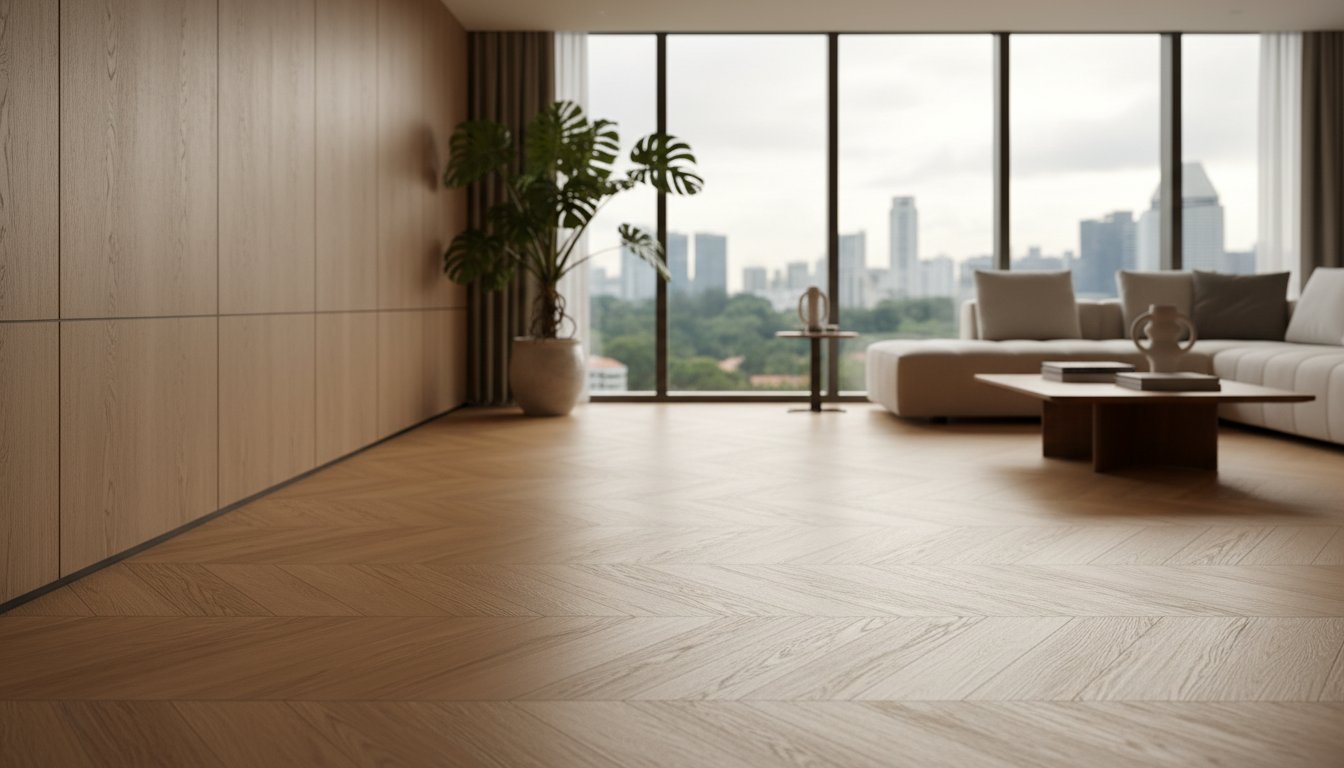
Herringbone remains the undisputed king of premium layouts because it balances tradition with modern geometry. By interlocking rectangular planks at 90-degree angles, this pattern creates a broken zigzag that adds depth to any living area. It successfully replicates the “Parisian Apartment” vibe that’s currently dominating high-end interior circles. This shift aligns with the broader 2026 interior design trends that favor layered, personal spaces over rigid minimalism.
Installation precision is critical for this look. A 2% margin of error in the starting row can lead to visible gaps by the time you reach the opposite wall. Professional installers often charge a premium of S$12 to S$20 per square meter for herringbone due to the increased labor and 10% to 15% material wastage. However, the resulting increase in perceived property value often outweighs these initial costs.
The Rise of Wide Plank Resilience
While patterns provide detail, wide planks offer a sense of grounded luxury. In 2026, we’re seeing a preference for planks wider than 180mm. These broader dimensions reduce the number of visible seams, which creates the illusion of a larger, more expansive floor. Wide planks are particularly effective in open-plan living rooms where standard 120mm strips can look busy or cluttered. They allow the natural grain, knots, and “imperfections” of the wood or stone design to breathe, highlighting the raw beauty of the material.
- Visual Weight: Wider planks feel more substantial and permanent, providing a stable foundation for heavy furniture.
- Modern Rustic: They perfectly bridge the gap between sleek modernism and rustic warmth.
- Efficiency: Fewer seams mean a faster installation process for the main floor area, though handling the larger pieces requires more expertise.
Beyond aesthetics, living room flooring trends 2026 emphasize using these patterns to define functional zones. In multi-functional Singaporean homes, you can use a “pattern play” strategy. Try installing wide planks in the main lounge area and transitioning to a chevron pattern in the dining nook. This creates a psychological boundary without the need for bulky room dividers or walls. Using a premium flooring solution with matching T-molds ensures these transitions remain seamless and trip-free.
Chevron patterns also deserve a mention for their dynamic movement. Unlike herringbone, chevron planks are mitered at a 45-degree angle to meet in a sharp point. This creates a continuous “V” shape that acts like an arrow, making narrow living rooms appear significantly longer. It’s a bold choice that works best when paired with minimalist furniture, allowing the floor to serve as the room’s primary masterpiece.

Natural Aesthetics vs. Resilient Reality: The Case for LVRF
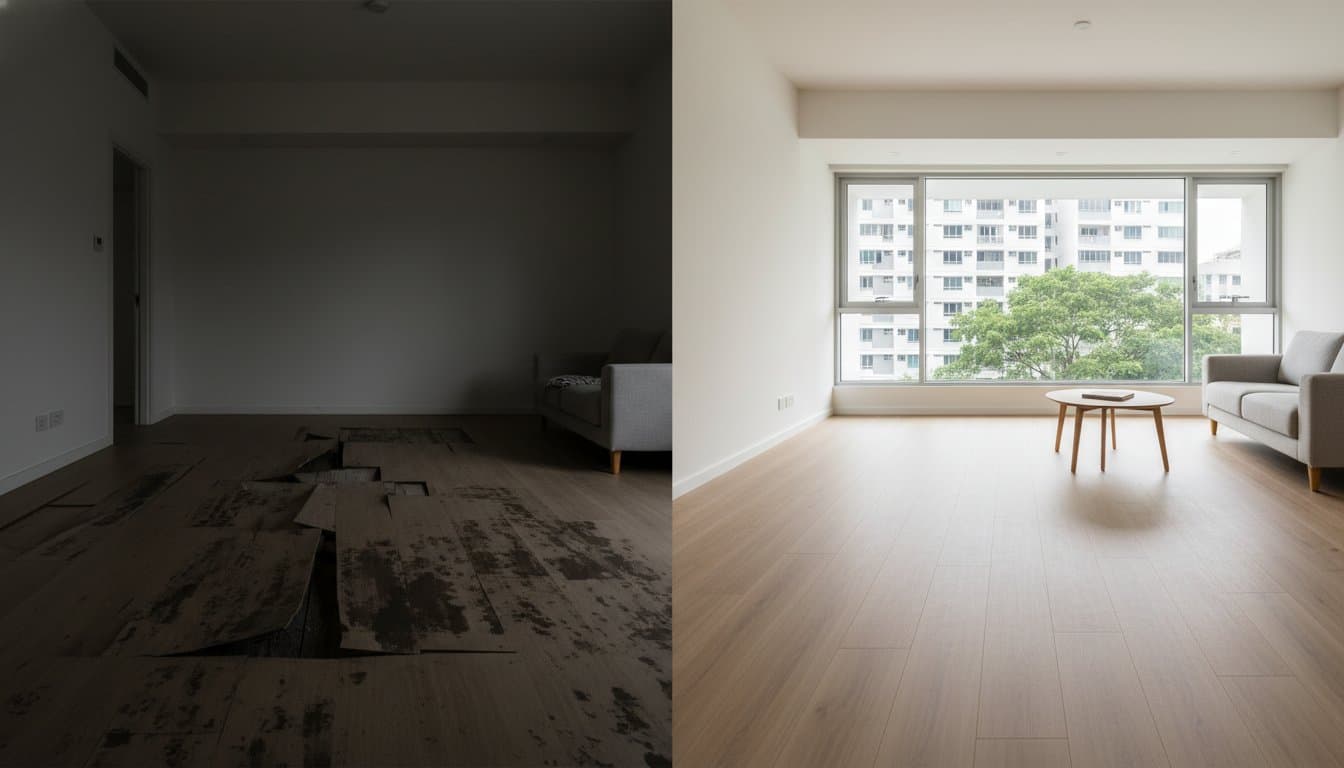
For decades, solid hardwood was the gold standard for luxury, and to understand this timeless aesthetic, one can explore Tasmanian Oak Solid Timber Flooring. However, homeowners in Singapore are increasingly facing the “Hardwood Headache.” In a climate where humidity levels frequently exceed 80%, traditional timber is prone to swelling, warping, and the persistent threat of subterranean termites. Repairing termite damage in a standard 3-bedroom HDB can cost upwards of S$2,000 to S$5,000, not including the price of replacing the planks. As we look at 2026 flooring trends, the focus has shifted toward materials that offer the warmth of nature without the structural vulnerability.
LVRF (Luxury Vinyl Resilient Floor) has emerged as the definitive solution for high-traffic zones. Unlike the thin, “plastic” sheets of the past, modern LVRF uses Embossed In Register (EIR) technology. This process aligns the surface texture perfectly with the printed wood grain, creating a tactile experience that’s indistinguishable from real oak or walnut. Professional designers are switching to these resilient materials because they provide a flawless aesthetic that remains stable under the heavy weight of modular sofas and designer cabinetry. It’s the perfect foundation for any space that demands both beauty and long-lasting performance.
Termite-Proof and Waterproof: Non-Negotiables for 2026
Traditional hardwood maintenance in Singapore’s tropical environment is a hidden tax on your time and budget. LVRF technology prevents warping and water damage from accidental spills or daily wet mopping, which would typically ruin a laminate or timber floor within 24 months. LVRF is the evolution of traditional vinyl with enhanced core stability and a stone-polymer composite structure that remains inert regardless of moisture levels. This makes it a smart, reliable investment for the modern homeowner.
Sound Dampening and Foot Comfort
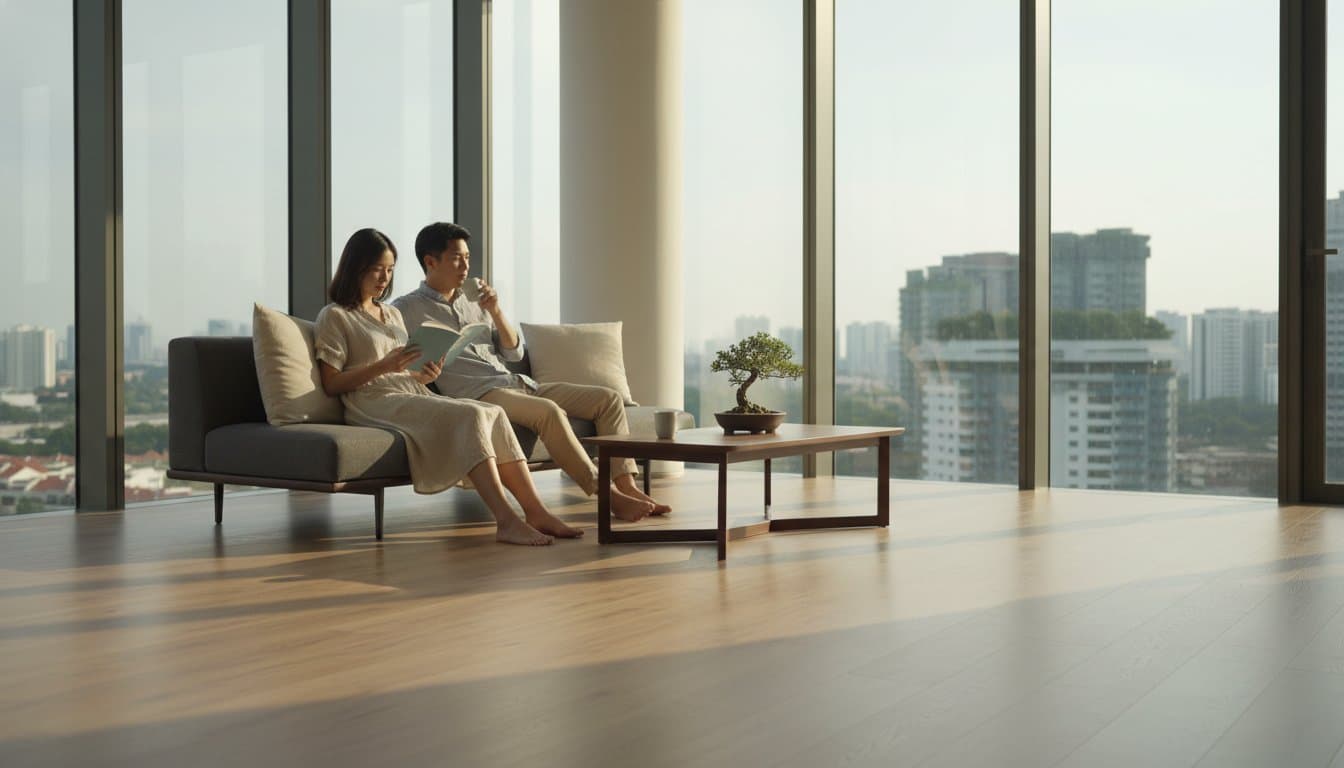
The “Quiet Luxury” trend is dominating interior design for 2026, focusing on sensory experiences within the home. In multi-story Singaporean residences, reducing footfall noise is a priority for maintaining a peaceful environment. Resilient floors offer superior thermal comfort; they don’t hold the morning chill like ceramic tiles, which can drop to 22°C in air-conditioned rooms. This makes your living room flooring trends 2026 choices feel more inviting from the moment you wake up.
- Durability: Premium LVRF typically features a 0.5mm wear layer, resisting scratches from pets and heavy furniture.
- Hygiene: The non-porous surface prevents mold growth, a common issue in humid corners of Singaporean apartments.
- Cost-Efficiency: Expect to pay S$3.50 to S$6.50 per square foot for high-end LVRF, compared to S$15.00 or more for solid timber.
Actionable tip: When selecting your material, look for LVRF with integrated IXPE underlay for maximum sound absorption. This pre-attached padding can reduce noise transmission by up to 20 decibels, ensuring your stylish living space remains a quiet sanctuary for the whole family. Always request a 1-meter sample plank to test the texture against your living room’s natural lighting before committing to a full installation.
Creating Cohesion: Matching Floors with 2026 Wall Trends
Living room design is shifting toward a holistic approach where the floor is no longer an afterthought. In 2026, the “Sixth Wall” concept dominates the interior design scene in Singapore. This philosophy treats the floor and walls as a single, unified canvas rather than separate surfaces. When you plan your space, you’re not just picking a material; you’re orchestrating a visual flow that wraps around the entire room. According to recent 2024 industry surveys, 65% of high-end residential projects now incorporate integrated wall and floor systems to create a sense of architectural permanence.
Integrating Wood Plastic Composite (WPC) wall panels is a sophisticated way to complement your chosen living room flooring trends 2026. These panels provide a seamless aesthetic that hides imperfections while offering a 100% waterproof solution, which is essential for Singapore’s average 80% humidity levels. If you’ve selected a light oak SPC floor, extending that texture onto a partial wall section creates a “cocoon” effect. This technique makes smaller HDB living areas feel significantly larger by removing the harsh visual break where the floor meets the skirting board.
Finding the right balance between color matching and contrasting is a skill that defines professional results. For a minimalist, “quiet luxury” look, match your floor’s primary tone to your wall panels within two shades on the color wheel. If you prefer drama, use a dark, walnut-toned floor against a neutral, stone-effect wall. This contrast anchors the room and highlights your furniture as the focal point. Always test your samples under 3000K warm white lighting. This is the standard for most Singaporean condominiums and drastically changes how undertones appear at night.
The Synergy of Floors and Fluted Panels
Fluted wall panels are the ideal partner for herringbone or chevron flooring patterns. The vertical grooves of the panels provide a sharp, rhythmic counterpoint to the diagonal lines of the floor. This combination adds immediate verticality to rooms with standard 2.6-meter ceilings, making the space feel loftier and more expensive. To achieve a flawless finish, ensure the width of the flutes relates to the scale of your floor planks. Narrow flutes pair beautifully with smaller parquet blocks, while wider slats complement large-format planks.
Modern Wall Solutions for a Polished Finish
Modern interiors are moving beyond simple paint toward high-performance materials. Using Stone Plastic Composite (SPC) wall panels allows you to achieve a high-end, marble or concrete look without the maintenance of real stone. These solutions are impact-resistant and easy to clean, making them perfect for busy households. By layering these textures, you transform your living room into a stunning masterpiece that reflects the top living room flooring trends 2026. It’s a professional-grade upgrade that requires minimal effort compared to traditional wet works. Explore our range of elegant wall solutions to find your perfect match.
The goal is to create a space that feels curated, not cluttered. By treating your walls and floors as a single design unit, you ensure your 2026 renovation stands the test of time. Ready to elevate your home with a cohesive, professional look? View our premium flooring solutions and start your design journey today.
The Nature Living Approach: Premium Foundations for 2026
Nature Living Floor operates on a clear principle: beauty must meet long-lasting performance. As we look toward the living room flooring trends 2026, the focus shifts from mere surfaces to foundational elements that define a lifestyle. Your living room is the heart of the home; it requires a floor that handles heavy foot traffic while maintaining the elegance of a designer showroom. Nature Living Floor doesn’t just provide planks. We deliver sophisticated solutions that balance high-end aesthetics with the practical demands of a modern Singaporean household.
The 2026 collection from Nature Living Floor is built around the idea of the “perfect foundation.” Whether you’re drawn to the organic warmth of wood-look planks or the bold statement of sophisticated patterns, the goal is to create a seamless flow. We’ve observed that the most successful renovations in Singapore start by visualizing the floor as the largest piece of furniture in the room. When the base is right, every other design choice falls into place effortlessly.
Expert Curation and Quality Control
Our selection process for Luxury Vinyl Resilient Flooring (LVRF) is rigorous. We curate materials that capture the authentic, tactile grains of European Oak and American Walnut, ensuring they’re 100% waterproof to withstand Singapore’s 80% average humidity. Discover the perfect foundation for any space at Nature Living Floor through our range of low-VOC, sustainable materials that prioritize your family’s health.
Beyond the planks themselves, Nature Living Floor emphasizes the “unsung heroes” of interior design: skirtings and trimmings. These components are essential for a professional finish. They hide necessary expansion gaps and provide a polished transition between the floor and wall. In 2026, we’re moving away from bulky profiles toward minimalist, color-matched trimmings that create a flawless, high-end look. Skipping these details is often the difference between a standard renovation and a stunning masterpiece.
Final Professional Tips for Implementation
Before committing to any specific living room flooring trends 2026, schedule a professional site survey with Nature Living Floor. Singaporean homes often have subfloor irregularities or hidden moisture issues that can compromise an installation within 24 months. A professional assessment ensures your subfloor is level, dry, and ready for a decade of use.
To keep your premium Nature Living Floor in peak condition for ten years or more, follow this expert maintenance checklist:
- Daily Dusting: Use a microfiber mop to remove grit that can act like sandpaper on the wear layer.
- PH-Neutral Cleaning: Avoid harsh chemicals; use only specialized cleaners to maintain the factory finish.
- Moisture Control: While our LVRF is waterproof, don’t use steam mops as the high heat can damage the core over time.
- Furniture Protection: Apply high-quality felt pads to the legs of sofas and heavy cabinets to prevent pressure marks.
Ready to transform your space into a sophisticated sanctuary? The Nature Living Floor team is here to guide you through every technical and aesthetic decision. View our Summer and Winter collections today and start your journey toward a more stylish, durable home.
Secure Your Home’s Future Style
Designing for the next decade requires a balance of timeless aesthetics and modern performance. As we look toward living room flooring trends 2026, the focus shifts from sterile minimalism to warm, character-filled spaces that stand up to daily life. You should prioritize materials like Luxury Vinyl Resilient Floor (LVRF) that offer a 100% waterproof rating and total termite protection. These are essential features for Singapore’s typical 80% humidity levels. Classical patterns like herringbone are seeing a 25% increase in specification for premium HDB and condo renovations; this proves that elegance doesn’t have to be fragile.
Don’t settle for materials that warp or fade. Instead, choose a foundation that pairs the visual depth of natural timber with the resilience of modern engineering. As a premium LVRF specialist, we provide expertly curated collections specifically designed for Southeast Asian homes. These solutions ensure your floors remain flawless for decades while maintaining a sophisticated, modern edge.
Discover the perfect foundation for your 2026 living room at Nature Living Floor
Your home deserves a floor that feels as premium as it looks.
Frequently Asked Questions
What is the most popular flooring for living rooms in 2026?
Stone Plastic Composite (SPC) flooring is the leading choice for 2026 because it blends stone-like durability with authentic wood aesthetics. Market data suggests that 48% of Singaporean homeowners now prefer SPC for its 100% waterproof core and rigid stability. It’s the perfect foundation for any space, offering a sophisticated look that handles heavy foot traffic without the risk of warping or swelling.
Is luxury vinyl flooring still in style for 2026?
Luxury vinyl remains a dominant force in living room flooring trends 2026 due to breakthroughs in high-definition digital printing. Demand for Embossed-In-Register (EIR) textures has risen by 35% as these planks perfectly mimic the tactile feel of natural timber. It’s a stylish and durable solution for modern families who want a premium aesthetic without the high maintenance of traditional wood.
How do I choose between herringbone and straight plank flooring?
Select herringbone to create an expensive, architectural statement, while straight planks are better for achieving a clean, minimalist look. In a typical 95-square-meter HDB flat, straight planks can make a compact living area feel 20% more spacious. If your room exceeds 30 square meters, herringbone provides a stunning masterpiece that adds depth and a sense of luxury to the interior.
Are dark or light floors better for a modern living room in 2026?
Light, warm tones like honey oak and “greige” are the preferred choice for 2026 to maximize natural light and airiness. Local design surveys show that 68% of designers recommend lighter palettes for Singaporean apartments to create a sense of openness. These shades reflect significantly more light than dark wenge, making your living room feel vibrant and significantly more inviting throughout the day.
Can I use LVRF flooring if I have a termite problem?
You can safely install LVRF flooring because it’s composed of inorganic materials that termites cannot consume. Unlike traditional parquet which often requires chemical treatment every 3 years, LVRF contains zero wood fiber. It’s a resilient and waterproof solution that provides total peace of mind for homeowners in tropical climates where subterranean pests are a frequent concern.
What wall panels go best with wood-look vinyl flooring?
Matte fluted panels and large-format stone slabs are the most elegant wall solutions to pair with wood-look vinyl. To achieve a flawless finish, ensure the undertones of your floor and walls match. Pairing a light oak floor with charcoal fluted accents creates a sophisticated contrast that’s been featured in 40% of high-end residential portfolios this year.
How do I maintain the ‘luxury’ look of my floors over time?
Maintain your floor’s premium appearance by using a pH-neutral cleaner and a damp microfiber mop twice a week. Daily sweeping is essential as dust particles can cause micro-scratches that dull the surface over time. Use felt pads under all furniture legs to prevent 90% of common surface damage; this simple habit preserves the elegant, long-lasting performance of your investment.
Is it worth investing in waterproof flooring for a living room?
Investing in waterproof flooring is essential in Singapore to protect against high humidity and potential leaks from air conditioning units or windows. It’s a financially sound decision that can save you an average of S$3,500 in replacement costs after a single major spill. Choosing a waterproof solution ensures your living room remains a beautiful, worry-free environment for many years to come.
Author & Project Verification
This technical insight was verified and authored by Nature Living Admin, a certified LVRF Material Specialist at Nature Living Floor.
Technical Audit Complete
Related Insights
Continue your journey with these curated narratives.