How to Clean LVRF Flooring: The Expert Guide to Maintaining Premium Surfaces

Technical Editorial Director
AI Search Overview
What is it?
Discover How to Clean LVRF Flooring: The Expert Guide to Maintaining Premium Surfaces with Nature Living Floor. Expert insights on premium flooring solutions in Singapore.
Why it's important?
Understanding How to Clean LVRF Flooring: The Expert Guide to Maintaining Premium Surfaces is crucial for ensuring durable, waterproof, and aesthetically premium flooring installations in Singapore's humid climate.
Key Benefits
- Long-term durability
- High structural integrity
- Water & slip resistance
Is the very product you’re using to sanitize your home actually stripping away its elegance? Many homeowners find that standard supermarket cleaners leave behind a stubborn, cloudy residue on their Luxury Vinyl Resilient Flooring, turning a sophisticated surface into a dull disappointment. You want your floors to remain the perfect foundation for your space, but contradictory online advice makes it difficult to know which chemicals are truly safe for your investment.
Learning how to clean LVRF flooring doesn’t require aggressive scrubbing or professional services, which can cost up to $2.00 per square foot as of May 2026. Instead, the secret lies in a minimalist approach using pH-neutral solutions between 6 and 8 on the pH scale. In this expert guide, you’ll discover the specific maintenance rituals and FloorScore® certified tools needed to achieve a streak-free, factory-fresh shine. We’ll walk you through the essential steps to combine beauty with long-lasting performance, ensuring your premium surfaces stay flawless for decades.
Key Takeaways
- Understand the multi-layer science of your flooring to protect the critical wear layer from premature degradation and impact damage.
- Master the professional ritual of how to clean LVRF flooring using pH-neutral solutions to ensure a streak-free, factory-fresh shine every time.
- Learn the “Gentle First” rule for identifying and removing stubborn stains or scuffs without compromising the integrity of the resilient surface.
- Identify the hidden dangers of high-heat steam mops and acidic DIY solutions like vinegar that can permanently damage flooring joints.
- Implement long-term preservation strategies, including environmental controls and preventive care, to maintain an elegant foundation for your lifestyle.
The Science of Resilience: Why LVRF Flooring Requires Specific Care
LVRF isn’t just a surface; it’s a multi-layered engineering marvel. Unlike basic Vinyl composition tile, premium LVRF is designed to absorb impact while maintaining a flawless aesthetic. This resilience comes from a structured composition that balances flexibility with rigid stability, allowing the material to “bounce back” from heavy foot traffic. It’s the perfect foundation for any modern space, providing a silent, comfortable step that traditional hard surfaces often lack.
Understanding the technical makeup of your floor is the first step in mastering how to clean LVRF flooring. Standard cleaners often contain high pH levels or abrasive chemicals that slowly eat away at the factory-applied finish. When this happens, your floor loses its luster and becomes susceptible to permanent damage. By treating your floor as the foundational masterpiece of your home, you ensure its beauty lasts for decades. Professional care isn’t about working harder; it’s about choosing the right chemistry for the material.
To better understand this concept, watch this helpful video:
Anatomy of an LVRF Plank
Every plank is a stunning masterpiece of design and functionality. The UV-cured top coat acts as a transparent shield, protecting the surface from UV fading and daily spills. Beneath this, the high-definition decorative film provides the elegant look of natural timber or stone. The rigid core and backing provide 100% waterproof performance and essential sound-dampening qualities. These layers work in unison to create a durable, sophisticated environment. This construction is what allows LVRF to survive the rigors of a busy household while looking like a high-end designer installation.
The ‘Less is More’ Philosophy
Professional maintenance differs significantly from the old-fashioned “mop and bucket” approach. Aggressive scrubbing is actually counter-productive for resilient surfaces. It can create micro-scratches that trap dirt, making the floor look perpetually dull. This is why we advocate for a minimalist strategy. It’s about using the right microfibre technology and pH-neutral solutions rather than sheer force. Expert cleaners don’t drench the floor; they use controlled moisture to lift dirt without risking the integrity of the planks.
To keep your Luxury Vinyl Resilient Floor in peak condition, you must prioritize pH-neutrality. Solutions with a pH between 6 and 8 preserve the chemical bond of the wear layer. This ensures the surface remains easy to maintain without the need for harsh chemicals. It’s a simple, expert-led strategy that prioritizes the longevity of your investment over quick, aggressive fixes. This approach guarantees that your space remains a sophisticated retreat for years to come, helping you combine beauty with long-lasting performance in every room.
The Ultimate LVRF Maintenance Ritual: A Step-by-Step Guide
Maintaining an elegant interior requires more than just occasional effort; it demands a structured ritual. The primary goal is to preserve the factory-fresh finish that makes your home a stunning masterpiece. When considering how to clean LVRF flooring, the most effective approach is a consistent dry-to-damp sequence. This prevents abrasive particles from being dragged across the surface, which is a common cause of micro-scratches. By establishing a reliable cadence, you ensure your floors remain the perfect foundation for your stylish lifestyle.
Your essential toolkit should include a high-quality microfibre mop, a vacuum with a soft-bristle attachment, and a pH-neutral concentrate. Avoid standard residential “mop and bucket” methods that use excessive water. A comprehensive vinyl flooring maintenance guide highlights that using the wrong tools or harsh chemicals can void manufacturer warranties. Professional care relies on precision and the right chemistry rather than aggressive scrubbing.
Daily Dry Maintenance
Dust and grit are the enemies of a polished wear layer. Use a microfibre dust mop daily to capture fine particles that act like sandpaper underfoot. If you prefer vacuuming, ensure the beater bar is turned off. A spinning brush can mar the surface of your 5mm LVT Click Flooring. Focus on high-traffic transitions, such as entryways and kitchen zones, where debris accumulates most frequently. This simple three-minute habit prevents the majority of surface wear and keeps the aesthetic flawless.
Weekly Damp Mopping Protocol
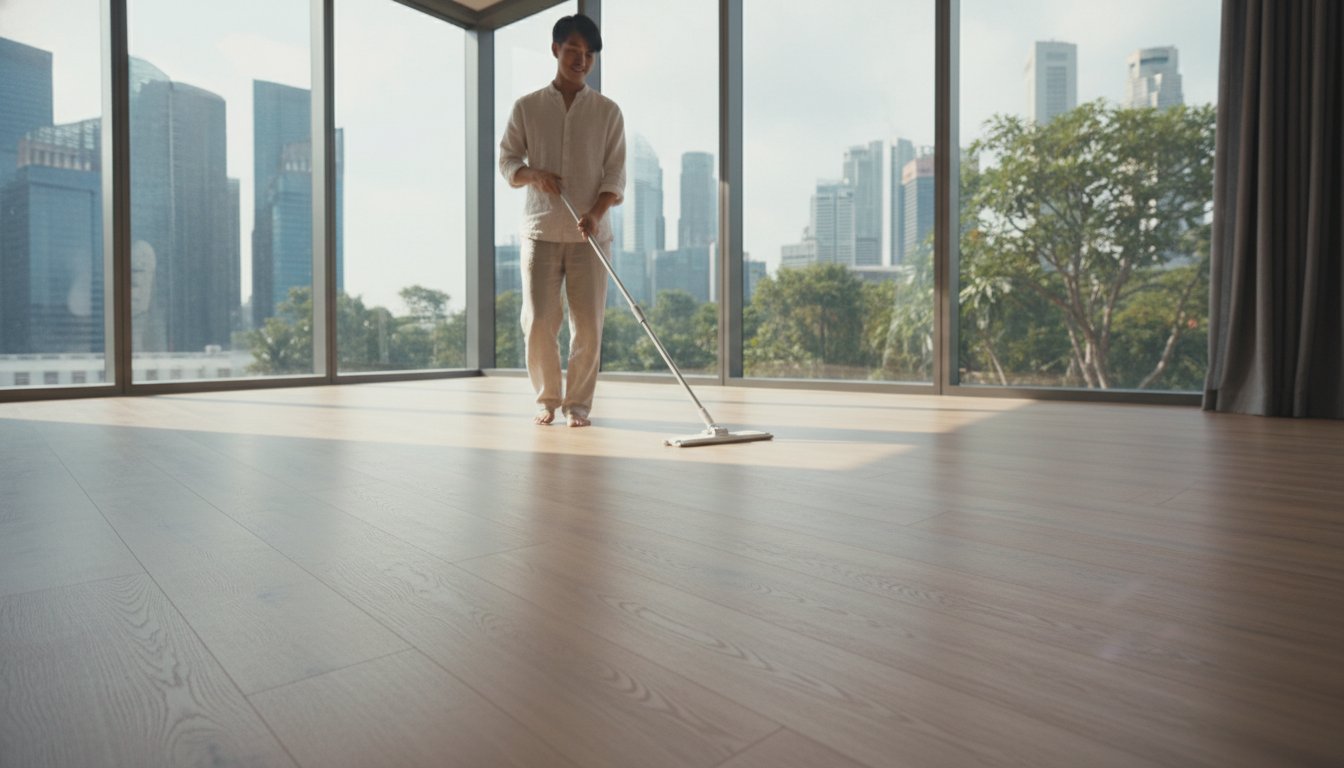
Once the surface is free of dry debris, proceed with a damp mop. Dilute your pH-neutral cleaner according to the expert specifications on the label. We recommend the “Mist and Mop” technique. Lightly spray the solution onto the floor or a microfibre pad rather than soaking the planks. Mastering how to clean LVRF flooring effectively relies on this moisture control. It prevents water from pooling in the joints, which is crucial for long-term stability. Air-drying is superior to buffing, as it allows the protective top coat to settle naturally without streaks.
To achieve a professional result, adopt the “Two-Bucket” method. Use one bucket for your cleaning solution and another for clean rinse water. This ensures you aren’t spreading dirty water back onto your premium surface. By following this repeatable ritual, you protect the investment you’ve made in your home’s design. If you’re beginning a new design journey, explore our premium flooring solutions to find a surface that combines beauty with long-lasting performance.

Advanced Solutions for Stubborn Stains and Scuffs
Accidents are inevitable in a lived-in home, but they don’t have to compromise your floor’s elegance. The secret to handling tough marks is the “Gentle First” rule. This professional approach prioritizes the least invasive method to protect the wear layer from unnecessary abrasion. Whether you’re dealing with a splash of red wine or a stubborn rubber scuff, identifying the stain type is the first step toward a successful restoration. By treating each mark with precision, you preserve the long-lasting performance of your premium surface.
One frequent frustration for homeowners is the appearance of a persistent cloudy residue. This hazy film is usually the result of using standard supermarket soaps or dish detergents that contain surfactants and oils. Many common dish soaps have a pH level above 9.0, which is far too alkaline for a premium finish. These ingredients cling to the surface and trap dirt, making the floor look perpetually dull. To fix this, you must strip the residue using a dedicated pH-neutral solution. Understanding how to clean LVRF flooring properly means avoiding these “all-purpose” cleaners that trade long-term surface health for temporary convenience.
Removing Scuffs and Rubber Marks
Mechanical marks from shoe soles or furniture legs can disrupt the visual flow of your room. Before reaching for chemicals, try the professional “tennis ball trick.” Rubbing a clean, dry tennis ball over the mark provides enough friction to lift the rubber without scratching the UV-cured top coat. It’s a simple, effective way to maintain a flawless finish. If the mark persists, use a soft microfibre cloth with a single drop of neutral cleaner for localized friction. You must avoid abrasive pads, steel wool, or magic erasers at all costs. While some online forums suggest these, they act like high-grit sandpaper and will permanently dull the sophisticated sheen of your planks.
Dealing with Spills and Pigments
Spills involving wine, coffee, or ink require a specific technique to prevent staining. Always blot the liquid with a clean paper towel; never wipe. Wiping forces the pigment deeper into the texture of the decorative film. For stubborn ink or dye, you can safely use a small amount of isopropyl alcohol on a cotton ball. Apply it only to the affected area and rinse with water immediately after the stain is lifted. To neutralize odors from organic spills, stick to pH-neutral solutions rather than heavy perfumes or oils. These oils contribute to the very cloudy residue you’re trying to avoid. By mastering how to clean LVRF flooring using these advanced techniques, you ensure your floor remains the perfect foundation for your space.
Critical Mistakes: What to Avoid to Protect Your Investment
Protecting your investment requires avoiding common misconceptions that masquerade as “deep cleaning” hacks. When you understand how to clean LVRF flooring, you quickly realize that many traditional methods are actually destructive to premium finishes. Using the wrong tools or chemicals doesn’t just dull the surface; it can lead to structural failure of the planks. By steering clear of these pitfalls, you maintain the sophisticated allure of your home’s foundation without risking its long-lasting performance.
The Danger of Heat and Pressure
Steam mops are often marketed as a hygienic solution for hard surfaces. They aren’t suitable for resilient materials. High-heat moisture, often exceeding 100 degrees Celsius, is forced directly into the seams of the floor. This intense thermal energy can compromise the adhesive or the click-lock integrity of your 5mm LVT Click Flooring. Over time, this pressure leads to edge lifting or warping, where the planks lose their modern, flat profile. Steam mops are strictly restricted for LVRF use because the forced moisture can permanently delaminate the decorative film from the core. This damage is usually irreversible and can void your manufacturer warranty immediately.
Chemicals to Blacklist
Many DIY resources recommend white vinegar as a “natural” alternative. This is a serious fallacy for high-end surfaces. White vinegar has a pH level of approximately 2.5, making it a potent acid. Regular use will etch the UV-cured top coat, turning a stylish sheen into a dull, lifeless surface. Other chemicals to avoid include:
- Ammonia-based cleaners: These have a high pH (often around 11.0) and are the fast track to a yellowed, brittle surface.
- Bleach: This harsh oxidant breaks down the cross-linking polymers in the wear layer, stripping the floor of its protective properties.
- Soap-based detergents: These are the primary cause of the “sticky film” and visible footprint marks that plague many homes.
Abrasive tools like scrub brushes or steel wool belong in the garage. They create microscopic fissures in the wear layer that trap dirt, making the floor impossible to keep clean. Similarly, you should never apply topical waxes or polishes. Modern LVRF features a factory-cured shield that doesn’t require artificial shining. Adding a wax layer creates a maintenance nightmare, as it won’t bond properly and will eventually peel in unsightly patches. If you’re looking for a surface that’s built for both durability and style, explore our Luxury Vinyl Resilient Floor solutions to find the perfect foundation for your space.
Long-term Preservation: Beyond the Mop
Mastery of an elegant interior extends past the weekly mopping routine. It involves a proactive stance on environmental factors that influence the lifespan of your surfaces. While learning how to clean LVRF flooring is essential, the true secret to a flawless home lies in prevention. By implementing a few professional preservation strategies, you ensure your floor remains a stunning masterpiece for decades. This holistic approach protects the wear layer from the silent stressors that typical cleaning can’t address.
Establishing a “first line of defense” is the most effective way to combine beauty with long-lasting performance. Professional designers know that understanding how to clean LVRF flooring is only effective if you also stop abrasive grit at the door. Every grain of sand tracked into your home acts like a microscopic abrasive, slowly dulling the sophisticated finish of your planks. By managing the environment around your floors, you maintain the premium quality of your investment with significantly less effort.
Strategic Protection with Accessories
The “Walk-off” Mat Strategy is a non-negotiable requirement for a professional flooring solution. Place high-quality, non-rubber backed rugs at every external entry point to capture 80% of outdoor debris before it touches your LVRF. Inside the home, furniture protection is equally critical. Use high-density felt protectors on the legs of heavy sofas and dining tables to prevent localized pressure damage. Avoid plastic or hard rubber casters, as these can mar the UV-cured top coat over time. Check out our range of Essential Flooring Accessories for a professional finish that complements your design.
Sunlight and Temperature Management
Managing sunlight exposure is vital for preserving the vibrant decorative film of your planks. While modern LVRF is engineered for stability, prolonged exposure to direct, high-intensity UV rays can cause subtle fading over several years. Use sheer curtains or UV-rated window treatments during peak daylight hours to protect your sophisticated aesthetic. Additionally, LVRF performs best in consistent indoor temperatures. Drastic fluctuations can cause the core to expand and contract, putting unnecessary stress on the click-lock joints. Discover more about the durability of LVRF in our sophisticated guide to vinyl types.
Finally, it’s important to recognize when a situation requires more than a standard ritual. If you notice deep gouges that have breached the wear layer or significant “cupping” at the seams, consult a professional advisor. These issues often indicate underlying subfloor problems or mechanical damage that surface cleaning cannot fix. By staying vigilant and using the right accessories, you’ll ensure your floors remain the perfect foundation for your stylish lifestyle for years to come.
Secure the Longevity of Your Premium Interior
Mastering how to clean LVRF flooring is the ultimate investment in your home’s aesthetic future. By prioritizing pH-neutral solutions between 6 and 8 on the pH scale and a consistent dry-to-damp ritual, you protect the sophisticated wear layer that defines your space. You’ve learned that avoiding the destructive force of steam mops and acidic DIY hacks is just as critical as the cleaning itself. These expert-led strategies ensure your foundation remains as resilient as the day it was installed.
Nature Living Floor stands as a specialist in Luxury Vinyl Resilient Floor (LVRF) solutions across Singapore, Malaysia, and Myanmar. Our premium collections integrate advanced waterproof, termite-proof, and slip-resistant technology, providing a dependable foundation that combines beauty with long-lasting performance. Whether you’re refreshing a single room or transforming a stunning masterpiece, our design-savvy advisors are ready to guide your journey. It’s easy to maintain a flawless finish when you have the right foundation and the expert knowledge to care for it.
Explore our premium LVRF collections and find the perfect foundation for your space.
We’re confident that your commitment to these professional rituals will keep your home looking elegant for decades to come.
Frequently Asked Questions
Can I use a steam mop on my LVRF flooring?
No, you shouldn’t use a steam mop on LVRF. The high-heat moisture, often exceeding 100 degrees Celsius, is forced directly into the seams, which can cause delamination or warping of the planks. This type of damage is typically irreversible and can immediately void your manufacturer warranty. Stick to a damp microfibre mop to maintain the structural integrity of your floor’s joints.
Is apple cider vinegar or white vinegar safe for cleaning vinyl?
Vinegar isn’t safe for cleaning premium vinyl surfaces because it’s highly acidic. With a pH level of approximately 2.5, white vinegar or apple cider vinegar will eventually etch the UV-cured top coat, turning a sophisticated sheen into a dull finish. Professional care requires a solution with a pH between 6 and 8 to preserve the chemical bond of the wear layer.
How do I get rid of the cloudy film on my vinyl floors?
To remove a cloudy film, you must strip the surface using a dedicated pH-neutral cleaner. This haze usually forms when homeowners use soap-based detergents that leave behind surfactants and oils. These residues trap dirt and create a sticky layer. Switching to the “Mist and Mop” technique with a residue-free solution will restore the factory-fresh shine of your stunning masterpiece.
What is the best pH-neutral cleaner for LVRF?
The most effective solutions for how to clean LVRF flooring are professional-grade, pH-neutral concentrates. Products like Bona Hard-Surface Floor Cleaner, which contains 92% USDA certified biobased content as of May 2026, are highly recommended. These cleaners are specifically formulated to lift dirt without leaving a film or degrading the protective top coat of your premium flooring solutions.
How often should I deep clean my resilient flooring?
You should perform a deep clean every 3 to 6 months depending on the level of foot traffic in your home. While daily dry care captures abrasive grit, a quarterly deep clean with a professional concentrate ensures that any microscopic build-up is removed. This cadence is essential for maintaining the flawless aesthetic that serves as the perfect foundation for any space.
Can I use a vacuum with a beater bar on LVRF?
No, you shouldn’t use a vacuum with a beater bar on LVRF. The stiff, spinning bristles can create micro-scratches on the surface of your 5mm LVT Click Flooring, leading to a dull appearance over time. Always use a soft-bristle attachment or a dedicated hard-floor setting to ensure your vacuum lifts debris safely without marring the finish of your elegant foundation.
Are magic erasers safe for removing scuffs on vinyl planks?
Magic erasers are too abrasive for premium vinyl planks and should be avoided. They act like 3,000-grit sandpaper, which can permanently strip the gloss from your floor’s wear layer. Instead, use a clean tennis ball or a soft microfibre cloth with a drop of neutral cleaner to lift scuffs safely. This professional secret maintains your floor’s long-lasting performance without damage.
Do I need to wax or polish my LVRF to keep it shiny?
You don’t need to wax or polish LVRF because it’s manufactured with a permanent, factory-cured top coat. Applying topical waxes is counter-productive; the wax won’t bond correctly to the non-porous surface and will eventually peel in unsightly patches. Understanding how to clean LVRF flooring means trusting the original engineering to provide a sophisticated shine without the need for artificial additives.
Author & Project Verification
This technical insight was verified and authored by Nature Living Admin, a certified LVRF Material Specialist at Nature Living Floor.
Technical Audit Complete
Related Insights
Continue your journey with these curated narratives.