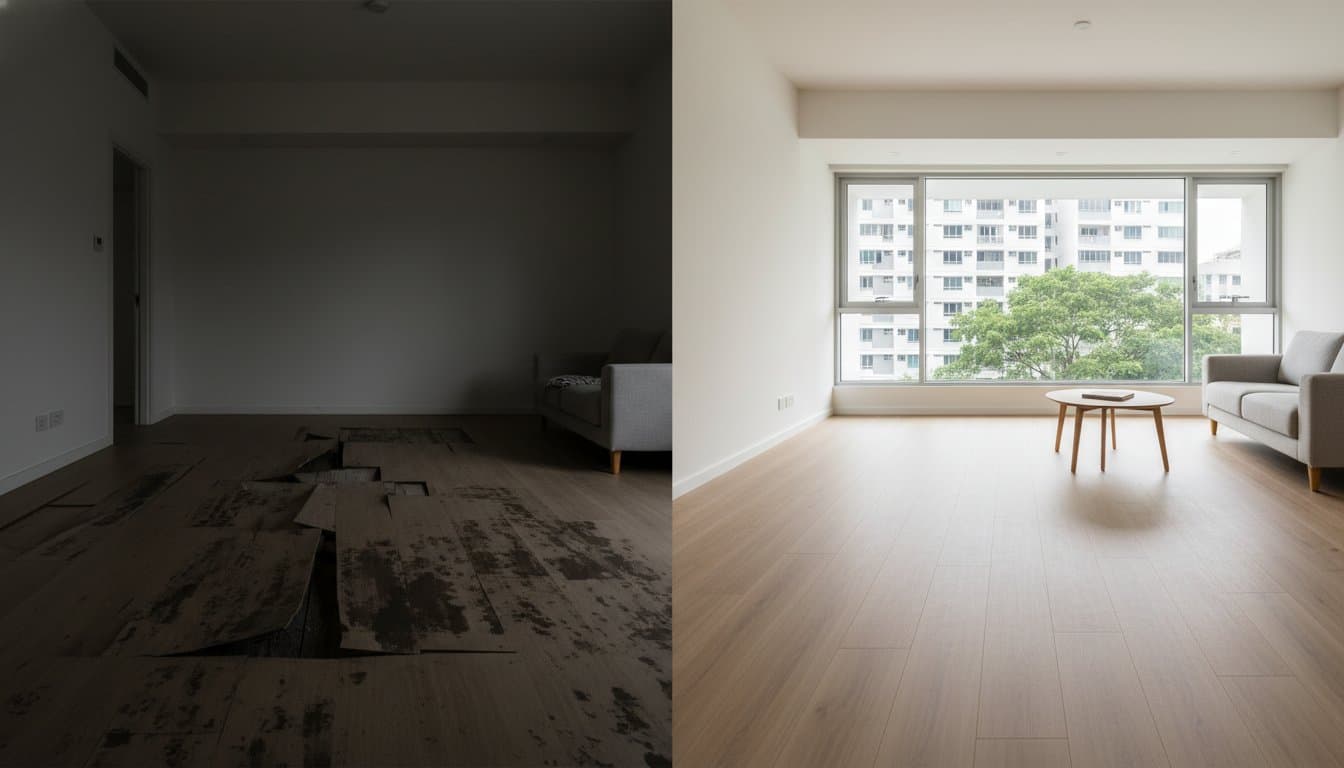
Basement Waterproofing and Flooring: The Professional Guide to a Dry, Elegant Space

Technical Editorial Director
AI Search Overview
What is it?
Discover Basement Waterproofing and Flooring: The Professional Guide to a Dry, Elegant Space with Nature Living Floor. Expert insights on premium flooring solutions in Singapore.
Why it's important?
Understanding Basement Waterproofing and Flooring: The Professional Guide to a Dry, Elegant Space is crucial for ensuring durable, waterproof, and aesthetically premium flooring installations in Singapore's humid climate.
Key Benefits
- Long-term durability
- High structural integrity
- Water & slip resistance
What if your damp, neglected basement could actually be the most sophisticated room in your home? Many homeowners in Singapore view their lower levels as a lost cause, plagued by the musty smells and high humidity that thrive in our tropical climate. It’s frustrating to watch valuable square footage go to waste because you fear foundation damage or floors that warp under pressure. You’ve likely realized that a superficial fix isn’t enough to stop the moisture.
This guide provides the professional blueprint to transform that space into a dry, elegant sanctuary by combining structural moisture management with premium waterproof vinyl flooring for basement environments. You’ll discover how to meet the SS 637:2018 waterproofing standards while selecting high-performance materials like Nature Living Floor’s 5mm LVT Click Flooring, which offers a sophisticated aesthetic for just S$2.50 per square foot. We’ll walk through the technical requirements for a flawless finish, from essential vapor barriers to the resilience of stone plastic composite cores, ensuring your new floor remains 100% waterproof and termite-proof. Discover how to create the perfect foundation for a stylish, modern lifestyle that adds genuine value to your property.
Key Takeaways
- Master the techniques to manage hydrostatic pressure and Singapore’s high humidity, creating a dry foundation for your premium interior design.
- Identify the professional waterproofing agents that seal concrete capillaries, ensuring your basement remains a reliable and sophisticated living space.
- Discover why LVRF is the ultimate solution and how to select the right waterproof vinyl flooring for basement applications to combine beauty with long-lasting performance.
- Follow a professional implementation checklist, including subfloor leveling and moisture testing, to ensure a flawless and durable installation.
- Elevate your basement aesthetic with fluted wall panels and elegant trimmings, providing a modern alternative to traditional wall solutions.
Understanding the Challenges of Basement Environments in SE Asia
Singapore’s tropical climate presents a unique set of obstacles for any sub-grade renovation. The primary culprit is hydrostatic pressure, a force that occurs when groundwater builds up around your foundation after heavy rainfall. Since concrete is naturally porous, this pressure literally pushes moisture through the microscopic capillaries of your basement walls and floor. It’s not just about visible leaks; it’s about the constant, invisible migration of water that can destabilize your home’s foundation and ruin interior finishes. With Singapore experiencing an average of 167 rainy days per year, the soil surrounding your basement remains saturated, creating a relentless cycle of moisture intrusion.
To better understand how moisture management relates to your flooring choice, watch this helpful video:
The Science of Sub-Grade Moisture
Think of your concrete slab as a giant, rigid sponge. Even when it appears dry on the surface, it’s often wicking moisture from the damp soil beneath through capillary action. There’s a critical distinction between liquid water seepage and water vapour transmission. While you might stop a visible leak, vapour can still rise and condense under your floor, leading to catastrophic failures in traditional materials. This hidden moisture is often the source of that persistent musty smell that plagues many Singaporean homes.
Actionable Tip: Inspect your basement walls and floor for a white, powdery residue known as efflorescence. This isn’t just dust; it’s a salt deposit left behind by evaporating water. It serves as a clear warning that your subfloor has high moisture levels and requires a professional solution before you proceed with any aesthetic upgrades.
Why Traditional Flooring Fails in Basements
In our high-humidity environment, choosing organic materials like timber or carpet is a high-risk gamble. These materials act as a food source for mould and attract termites, which are a pervasive threat in Singapore’s dark, damp spaces. When you install non-breathable surfaces over a damp slab, you create a greenhouse effect where moisture is trapped, leading to rot and foul smells. In Southeast Asia, subterranean termites can compromise a traditional timber floor in just a few months, turning a premium investment into a liability.
This is why design-savvy experts recommend solutions that are impermeable to water. High-quality waterproof vinyl flooring for basement projects, particularly Luxury Vinyl Resilient Floor (LVRF), provides a sophisticated barrier that doesn’t support organic growth. Unlike wood that warps or carpets that harbor allergens, LVRF maintains its flawless appearance even when sub-grade humidity levels fluctuate. Selecting the right waterproof vinyl flooring for basement use ensures your investment remains elegant, durable, and healthy for your family.
Structural Waterproofing Methods: Building a Dry Foundation
Achieving a flawless basement transformation starts deep within the structure. You can’t simply cover up moisture; you must manage it at the source. Understanding the causes of basement moisture is the first step toward a permanent solution. For most homeowners in Singapore, the goal is to create a dry, reliable environment that supports the long-term performance of your waterproof vinyl flooring for basement installation.
Interior vs. Exterior Waterproofing
Exterior or “Positive-Side” waterproofing is the gold standard for new construction. It involves applying thick membranes to the outer foundation walls and installing drainage systems to redirect water. However, for existing homes where digging up the perimeter isn’t feasible, interior “Negative-Side” waterproofing is the professional choice. This method uses cementitious coatings that bond with the concrete, creating a barrier that resists hydrostatic pressure from the inside out. It’s a sophisticated way to reclaim space without massive excavation.
Expert Tip: Before you invest in finishes, ensure any structural repairs come with a multi-year warranty. A dry foundation is the only way to protect your stylish interior from future damage.
When dealing with active leaks or visible cracks, specialists often use PU (Polyurethane) injection. This resin expands upon contact with water, sealing the crack throughout the entire thickness of the wall. For generalized dampness, crystalline waterproofing agents offer a sophisticated fix. These chemicals react with the moisture in the concrete to grow non-soluble crystals, effectively plugging the capillaries and making the slab itself water-resistant. This preparation ensures your premium flooring solutions sit on a stable, dry base.
The Importance of a Vapour Barrier
Even a visually dry slab can emit water vapour. A 6-mil polyethylene sheet or a high-end integrated underlay is a non-negotiable step in the process. Without this barrier, vapour can accumulate under your floor, leading to cupping or adhesive failure. It’s a small investment that guarantees the structural integrity of your waterproof vinyl flooring for basement space. In Singapore’s high-humidity environment, this extra layer of protection acts as a safeguard against the “greenhouse effect” mentioned previously.
Actionable Tip: When laying your vapour barrier, overlap the seams by at least 6 inches. Seal every joint with heavy-duty waterproof tape and extend the barrier slightly up the walls. You’ll trim the excess later behind your skirtings, but this creates a continuous, airtight seal that keeps moisture away from your resilient floor.

Selecting the Best Basement Flooring: Why LVRF Outperforms Traditional Options
Once you’ve secured the structural integrity of your foundation, the focus shifts to creating a living space that feels as premium as the rest of your home. Choosing the right finishing material is critical for long-term satisfaction. In Singapore, ceramic tiles are a common default for damp areas. While waterproof, they are notoriously cold underfoot and the grout lines often become magnets for mold in sub-grade environments. Engineered wood, despite its natural beauty, remains an organic material. In a basement, it’s often a ticking time bomb for warping, swelling, and termite infestation. This is why waterproof vinyl flooring for basement projects has become the gold standard for design-savvy homeowners.
Luxury Vinyl Resilient Floor (LVRF) bridges the gap between aesthetics and extreme durability. It offers the tactile warmth and sophisticated appearance of hardwood but with the absolute resilience of stone. Because it’s 100% synthetic, it doesn’t just resist water; it remains completely unaffected by it. This makes it the smartest choice for transforming a neglected lower level into a high-end gym, home cinema, or guest suite.
The Superiority of LVRF in Damp Conditions
LVRF is crafted from inorganic materials, which is vital because mold and mildew require organic matter to thrive. By removing the food source, you ensure a healthier indoor air quality for your family. When Understanding Basement Moisture, one realizes that vapor transmission is a constant factor. Modern SPC (Stone Plastic Composite) core vinyl provides incredible dimensional stability. It won’t buckle or cup even when humidity levels spike during the monsoon season. You can explore different types of vinyl flooring to see how engineering has evolved to handle these specific tropical challenges.
Aesthetic Versatility without the Risk
You don’t have to sacrifice your design vision for functionality. You can achieve a sophisticated herringbone pattern or a rustic wide-plank oak look that is both waterproof and termite-proof. LVRF mimics natural textures with flawless precision, yet it remains fundamentally stable in dark, damp environments. It also acts as a natural insulator, making the room feel cozy and inviting rather than like a sterile bunker. Unlike cold stone, it’s comfortable for barefoot walking, which is essential for a truly usable living space.
Actionable Tip: Always opt for a high-quality click-lock system, such as a 5mm LVT option. If a rare plumbing emergency or severe external flood occurs, you can carefully unclick the planks, dry the subfloor thoroughly, and reinstall the same floor. It’s a smart, sustainable solution that protects your property value and prevents the need for a total floor replacement after a mishap.
Professional Implementation: A Checklist for a Flawless Transformation
Installing waterproof vinyl flooring for basement spaces is a precise engineering task that demands more than just a basic layout. Even the most resilient 5mm LVT click flooring can’t compensate for a poorly prepared subfloor. To ensure a professional result that protects your property value, you must follow a structured checklist that addresses the unique atmospheric pressures of sub-grade environments. Proper preparation is the difference between a floor that lasts decades and one that fails within the first year.
The DIY Moisture Test
Tape a 2×2 foot plastic square securely to the concrete floor for 48 hours.
When you peel the plastic back, look closely at the concrete. If the area has darkened or you see visible condensation on the underside of the plastic, your slab is still emitting significant amounts of water vapour. This is a clear signal that your structural waterproofing needs further attention before you proceed. While this test is a great starting point, it only measures surface moisture at a specific moment in time.
Actionable Tip: For a more precise and reliable reading, use a calcium chloride test. Most LVP manufacturers require moisture emissions to be below 5 pounds per 1,000 square feet per 24 hours to prevent long-term adhesive or core failure.
Subfloor Preparation and Levelling
A flat surface is non-negotiable for modern click-lock systems. Use a high-quality self-levelling compound to eliminate hollow spots or dips in the concrete slab. In Singapore’s construction landscape, older slabs often have irregularities that can cause click-lock joints to separate over time. You should aim for the subfloor to be flat within 3/16 of an inch over a 10-foot span. This precision ensures your floor feels solid and silent underfoot, reflecting the premium quality of the materials.
Cleaning the slab is just as vital as levelling it. You must remove all traces of old adhesives, oils, and construction dust to ensure your moisture barrier sits flush against the concrete. For the best results, visit Nature Living Floor for professional-grade underlays that provide the perfect foundation for any space.
Don’t overlook the importance of acclimatisation. Place your flooring boxes in the basement for at least 48 hours before you begin the work. This allows the material to reach equilibrium with the basement’s specific humidity levels. Finally, always leave a 1/4-inch expansion gap around the room’s perimeter. While the waterproof vinyl flooring for basement use is dimensionally stable, the surrounding walls can shift slightly with seasonal atmospheric changes. These gaps, hidden elegantly by skirtings and trimmings, prevent the planks from buckling. To complete your sophisticated look, explore our premium flooring solutions and start your project with the right materials today.
Elevating Your Basement with Nature Living Floor’s Premium Solutions
Transforming a damp, underutilised basement into a sophisticated living area requires more than just structural repairs; it demands a cohesive design vision. Nature Living Floor provides the perfect foundation for any space by offering curated collections that marry high-end aesthetics with industrial-grade resilience. Our Luxury Vinyl Resilient Floor (LVRF) is specifically engineered to thrive in the challenging sub-grade environments of Singapore, ensuring your stylish sanctuary remains flawless for years. By integrating premium materials that resist the unique pressures of tropical humidity, you move beyond simple utility to create a room that feels like a natural extension of your home.
Wall Solutions for Damp-Prone Areas
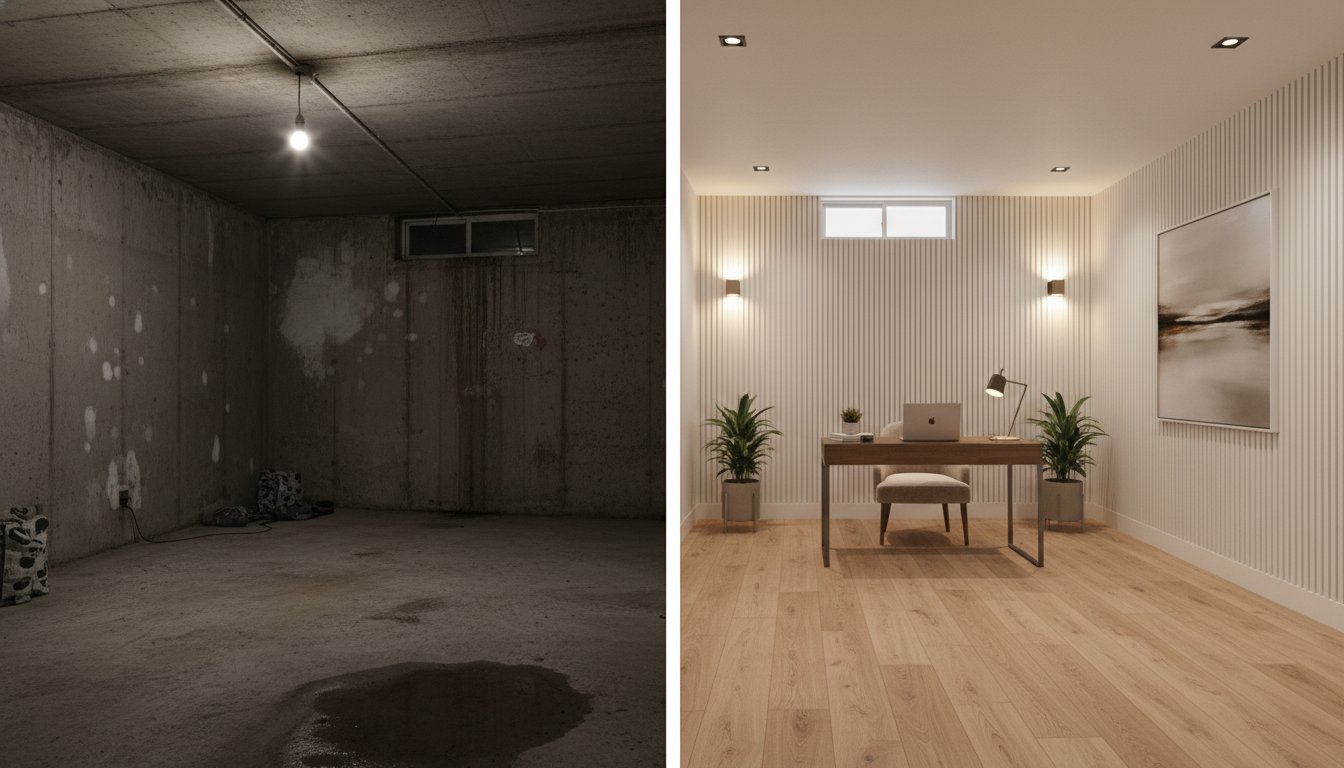
Traditional wall finishes like paint or wallpaper often fail in Singapore’s basements because they trap moisture, leading to unsightly peeling and persistent mould growth. Wood Plastic Composite (WPC) wall panels offer a sophisticated and durable alternative. These panels are non-porous and provide a resilient barrier against the high humidity levels typical of tropical sub-grade rooms. Unlike drywall, which can crumble when exposed to moisture, WPC maintains its structural integrity and premium appearance without the need for constant maintenance.
Actionable Tip: Use fluted wall panels to create a modern feature wall. The vertical lines add visual height to typically low basement ceilings while effectively hiding minor wall imperfections or the early signs of efflorescence. This design-savvy choice allows you to achieve a high-end look while maintaining a moisture-resistant environment.
The Nature Living Promise: Beauty Meets Performance
To achieve a truly professional finish, every detail must be moisture-resistant. Standard timber skirtings are highly vulnerable to rot and termites in a dark, damp basement. Instead, specify PVC skirtings and aluminium trimmings. These materials provide a sleek, modern transition between your waterproof vinyl flooring for basement and the walls. Because these accessories are 100% synthetic, they won’t swell or warp, ensuring the perimeter of your room remains as pristine as the day it was installed.
At Nature Living Floor, we believe a smart investment should never require a compromise on style. Our 5mm LVT click flooring is not only 100% waterproof but also termite-proof and slip-resistant, making it a safe and durable choice for family gyms or entertainment hubs. By choosing a complete system of floors, wall panels, and trimmings, you create a unified environment that significantly boosts your property value. Transitioning from inspiration to a completed project is simple when you have access to expert-led solutions designed for long-lasting performance.
View our premium flooring gallery to start your basement project and discover how our elegant solutions can transform your space into a stunning masterpiece.
Transform Your Basement into a Sophisticated Living Sanctuary
You now have the professional roadmap to reclaim your home’s lower level and turn it into a stunning masterpiece. By addressing hydrostatic pressure through structural waterproofing and selecting high-performance materials, you eliminate the risks of mold and termite damage. A flawless result depends on meticulous preparation; performing a calcium chloride test and ensuring a level subfloor are non-negotiable steps for a durable finish. Choosing a premium waterproof vinyl flooring for basement projects ensures your space remains elegant and resilient despite Singapore’s high humidity.
Nature Living Floor is a specialist in Luxury Vinyl Resilient Floor (LVRF), offering 100% waterproof and termite-proof materials that serve as the perfect foundation for any space. With showrooms across Singapore, Malaysia, and Myanmar, we’re dedicated to helping you achieve a sophisticated lifestyle through smart, reliable investments. Explore our curated collections of 5mm LVT click flooring and fluted wall panels to complete your vision.
Discover Stylish & Durable Flooring Solutions at Nature Living Floor
Your basement shouldn’t be a source of stress. It’s time to unlock its full potential and add lasting value to your property with confidence.
Frequently Asked Questions
Can I install vinyl flooring over a concrete basement floor?
You can install Luxury Vinyl Resilient Floor (LVRF) directly over concrete as long as the slab is level and dry. It’s essential to use a 6-mil polyethylene vapour barrier to block rising moisture. This ensures your waterproof vinyl flooring for basement stays dimensionally stable. Manufacturers typically require the subfloor to be flat within 3/16 of an inch over a 10-foot span to prevent joint separation.
What is the best way to waterproof a basement from the inside?
Negative-side waterproofing using cementitious coatings is the most effective internal method for existing Singaporean homes. These coatings bond with the concrete to resist hydrostatic pressure. You should also consider crystalline waterproofing agents that grow non-soluble crystals within the concrete pores. This aligns with the SS 637:2018 Code of practice, ensuring a dry foundation for your premium interior finishes and long-term structural integrity.
How much does basement waterproofing and flooring typically cost?
Material costs for SPC luxury vinyl plank generally range from S$2.00 to S$4.50 per square foot. Professional installation typically adds another S$1.00 to S$3.50 per square foot. For a 1,000 square foot space, the total installed cost can range from S$1,500 to S$10,500 depending on the material quality. Nature Living’s 5mm LVT flooring provides a premium solution at a competitive price point of S$2.50 per square foot.
Is LVRF really better than ceramic tile for a basement?
LVRF offers a more sophisticated experience than ceramic tile because it provides tactile warmth and superior comfort underfoot. While tile is waterproof, its grout lines are susceptible to mould and discolouration in damp environments. Vinyl flooring also eliminates the need for expensive demolition if you ever want to update your style. It’s a smart investment that combines the beauty of natural wood with a 100% waterproof performance.
How do I know if my basement has a moisture problem before I install floors?
The most reliable way to detect moisture is the 48-hour plastic sheet test or a professional calcium chloride test. You should also look for efflorescence, which is a white, powdery salt deposit on your walls or floor. If your concrete emits more than 5 pounds of moisture per 1,000 square feet over 24 hours, you must address the structural sealing before laying any waterproof vinyl flooring for basement.
Will a dehumidifier solve my basement moisture issues?
A dehumidifier only manages ambient humidity and won’t solve structural groundwater issues. While it helps prevent surface mould on furniture, it doesn’t stop hydrostatic pressure from forcing water through concrete capillaries. You need a two-tier approach that combines structural waterproofing with resilient finishing materials. Relying solely on a dehumidifier ignores the root cause of dampness, which can eventually lead to foundation damage and floor failure.
Can termites eat vinyl flooring in a basement?
Termites cannot consume LVRF because it’s made from 100% synthetic, inorganic materials. In Singapore’s tropical climate, subterranean termites are a significant threat to organic materials like timber and engineered wood. Choosing a termite-proof vinyl floor provides a layer of reassurance that your investment is protected. It’s the perfect foundation for any space where durability and long-lasting performance are non-negotiable priorities for the design-savvy homeowner.
What happens if my basement floods after I install LVRF?
If your basement floods, LVRF’s click-lock system allows for a flawless recovery. You can carefully unclick the planks, dry them thoroughly, and clean the subfloor before reinstalling the same materials. This isn’t possible with carpet or engineered wood, which would require total replacement. This resilience makes LVRF a smart, sustainable solution that protects your property value even during unforeseen plumbing emergencies or heavy tropical downpours.
Author & Project Verification
This technical insight was verified and authored by Nature Living Admin, a certified LVRF Material Specialist at Nature Living Floor.
Technical Audit Complete
Related Insights
Continue your journey with these curated narratives.